≥ 92% of participants will know how to incorporate both pharmacologic and non-pharmacologic therapies into a comprehensive, patient-centered plan for chronic pain.

CEUFast, Inc. is accredited as a provider of nursing continuing professional development by the American Nurses Credentialing Center's Commission on Accreditation. ANCC Provider number #P0274.
≥ 92% of participants will know how to incorporate both pharmacologic and non-pharmacologic therapies into a comprehensive, patient-centered plan for chronic pain.
After completing this course, the learner will be able to:
Pain may show up in many forms, and most people experience it at some point in their lives. Acute pain usually has an easily justifiable cause, such as an injury, surgery, or illness. Acute pain will often improve as the body heals. Chronic pain is different. It lingers past the expected recovery time and can affect how a person moves, sleeps, and functions day to day. It often becomes more than a physical symptom and starts to influence mood, stress levels, and overall quality of life. Because pain is rarely one-dimensional, understanding the type, cause, and impact is the first step toward choosing the right treatment plan.
Pain looks different for every individual, and effective management requires more than simply choosing a medication. It involves careful assessment, awareness of mental health factors, and an understanding of the risks tied to certain medications. In this course, expect to navigate the essentials of safe prescribing, explore both pharmacologic and non-pharmacologic treatment options, and gain tools that help providers make safer, more informed decisions in everyday practice.
The Joint Commission (TJC) expects healthcare providers to assess, manage, and monitor pain as part of routine, safe patient care. Accredited organizations must have clear policies on how pain is assessed, what treatment options are available, how staff are trained, and how those interventions are evaluated (TJC, 2021).
Providers (and nursing staff) are expected to check and document pain across all care settings. This includes:
Pain itself is subjective, meaning that what one individual may rate their pain as a "2," another might rate theirs an "8." Because of that, providers are expected to rely on the individual's own description. Pain thresholds, tolerance, and what helps relieve pain can vary widely between people. Past experiences, cultural background, emotional state, and the environment can all influence how someone perceives pain (Stretanski et al., 2025).
Since we cannot measure pain with a lab test or a monitor, standardized tools are used to support assessment findings. The Numeric Rating Scale (NRS) and the Wong-Baker FACES scale are two of the most common. They help providers and nursing staff track changes over time and evaluate whether an intervention is actually helping (Stretanski et al., 2025).
The NRS is the most commonly used pain scale. It is the one where an individual is asked to rate their pain from 0 to 10. A 0 means no pain, and a 10 means the worst pain they can imagine.
While it is a simple tool, it comes with some challenges. The number an individual gives is based completely on their own perception, so it is not consistent from one person to another. Someone may call their pain a "3," while another person with the same level of discomfort calls it an "8." Even in the same individual, the number can shift from one assessment to the next. Because of this, using these numbers to guide treatment or medication orders can be tricky, since the score is not something that can be measured or verified in an objective way (Stretanski et al., 2025).
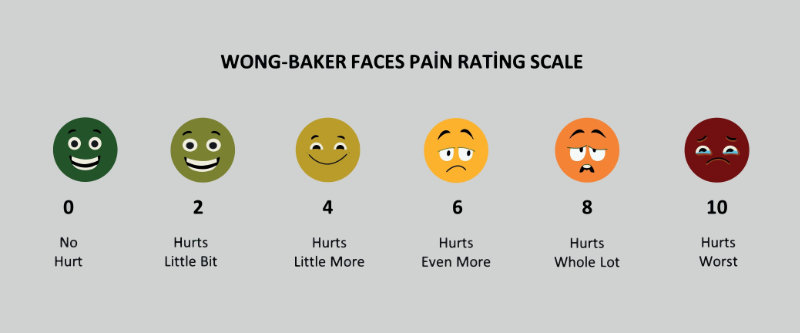
Individuals who are cognitively intact but unable to communicate clearly can use the Wong-Baker FACES scale to show how much pain they are in. The scale moves from a neutral or "smiling" face for no pain to progressively more distressed faces as pain increases. The individual points to the face that best reflects how they feel.
When someone cannot express their pain well, their pain is often missed or undertreated. This is where nursing assessment becomes essential. Nurses play a key role in noticing changes, interpreting what the individual is trying to communicate, and making sure their pain is addressed appropriately (Stretanski et al., 2025).
Image 1: Baker FACES Pain Rating Scale

A thorough pain assessment should include all of the following information (Stretanski et al., 2025):
Before making a plan of care, prescribers should review each individual's medical history. This includes looking at what has or has not worked in the past, looking at past medical records, labs, imaging, and more. All of this can help providers determine what has or has not worked and what they believe may be helpful moving forward.
If someone has past medical conditions, such as renal insufficiency, this can make treatment options more challenging. Renal insufficiency is one condition where there can be variations in how well certain medications are processed and metabolized within the body.
Prescribers are also expected to conduct a mental health assessment in their evaluation. Comorbid cognitive or mood disorders may impact pain control in certain individuals.
A physical assessment is also important when assessing an individual's pain. It gives the provider a starting point and helps identify anything unusual. During the exam, the provider watches how the individual moves—things like guarding, stiff posture, or trouble walking can tell a lot about where the pain is coming from.
The provider also checks for redness, swelling, any obvious deformities, or changes in temperature in the area. An abdominal exam may be needed if there is any concern for tenderness or bloating. Joints are checked to see how much range of motion there is and whether movement increases the pain (Tennessee Department of Health, 2024).
Depending on the description of the pain and the pain assessment, providers may opt to order diagnostic studies or imaging to help look for possible causes of pain. Common laboratory tests that can point toward inflammation or pain may include elevated inflammatory markers, such as C-reactive protein (CRP) or erythrocyte sedimentation rate (ESR). Imaging examples may include X-rays, computed tomography (CT), and magnetic resonance imaging (MRI). Less commonly, electrodiagnostic studies may be ordered, such as nerve conduction tests or electromyography (EMG) (Rahman et al., 2023).
Controlled substances refer to any form of medication, preparation, or compound that belongs to scheduled classes I through V.
The controlled substance schedules are reviewed annually and updated, as needed. Included in this review is determining their potential for drug misuse or abuse. Providers are expected to be well-versed in the various types of pharmaceuticals, as well as their risks and benefits. Responsible prescribing helps reduce adverse outcomes and promote patient safety.
Prescription opioids are well-known controlled substances, and their misuse is known to burden healthcare systems and society as a whole. Individuals may decide to take medications inappropriately or try to sell or distribute substances to others. This is known to be a contributing factor to the suspected increase in addiction and overdose rates. Providers who conduct thorough assessments can help reduce these risks.
Prescribers need solid, practical education to keep patients safe and reduce medication misuse. Making high-quality, evidence-based training more accessible is one of the most effective ways to close knowledge gaps and support safer prescribing (Lopez et al., 2023).
The Controlled Substances Act is updated each year through the United States Drug Enforcement Administration (DEA) and is in place to regulate and control substances. The schedule classes are as follows (Lopez et al., 2023):
Most controlled substances can impact the central nervous system (CNS). This can cause substances to affect mood, perception, or cognition. While some substances may be abused if they produce a euphoric feeling, misuse is still common for others. For example, if other medications affect sleep, anxiety, pain, and impact mood, it makes sense that some may choose to misuse these substances.
The Tennessee Board of Nursing (BON) regulates advanced practice registered nurses (APRNs) on their ability to prescribe controlled substances for the purpose of treating pain. The BON recognizes that pain is very subjective and that all advanced practice providers are expected to utilize sound judgment and critical thinking when opting to prescribe a controlled substance. Disciplinary action can occur if APRNs are found to be negligent or practice outside of their scope.
To avoid potential disciplinary action, the BON will monitor APRN prescription practices. In the event that disciplinary action is deemed necessary, APRNs could face educational program requirements, limited prescriptive authority, civil penalty, or more (Tennessee Board of Nursing, 2024).
The Tennessee BON has a very clear position on controlled substances. The Tennessee BON acknowledges that controlled substances may be necessary for pain management, as long as they are prescribed and managed safely and effectively.
As long as APRNs follow prescribing guidelines, the risk of disciplinary action will be low. One of the expected guidelines is that prescribers must always perform a thorough physical assessment, including obtaining a medical history. Prescribers must also review any previous substance use, assess psychological status, and follow up with adequate documentation. Prescribers have to ensure that their documentation supports their assessment findings and that, before they prescribe a controlled substance, a legitimate source of pain has been identified and documented.
In the event a nurse practitioner were to ever deviate from the necessary guidelines, disciplinary actions could be possible, which may include a reprimand, opioid continuing (mandatory) education, prescription restrictions, civil penalties, and more. Penalties may increase in severity if guideline violations are repetitive (Tennessee Department of Health, 2024).
The Tennessee Department of Health established clinical practice guidelines for the outpatient management of chronic non-cancer pain (Tennessee Department of Health, 2024).
Before prescribing controlled substances, providers should (Tennessee Department of Health, 2024):
An expectation for women of childbearing age is that, should she become pregnant while on opioid therapy, she should immediately notify her healthcare provider.
Providers should always evaluate for the potential of misuse or abuse prior to prescribing opioids. Common screening tools may include the Brief Risk Interview (BRI), Diagnosis, Intractability, Risk, Efficacy (DIRE) Score, Opioid Risk Tool (ORT), Pain Medication Questionnaire (PMQ), and the Screener and Opioid Assessment for Patients with Pain (SOAPP).
Pain management treatment goals should be clearly defined and focused on improving function and reducing pain, rather than completely eliminating it. The Pain, Enjoyment of life, and General Activity (PEG) assessment tool helps track treatment response by evaluating:
When assessing someone for pain management, it is important to look beyond the physical exam and the Controlled Substance Monitoring Database. Mental health can play a big role in how people experience pain and how well treatments work. The Tennessee Chronic Pain Guidelines recommend using screening tools to help identify concerns such as depression or mood changes. Common tools include the Patient Health Questionnaire-2 (PHQ-2) or Patient Health Questionnaire-9 (PHQ-9), the Hamilton Depression Rating Scale, and the Zung Self-Rating Depression Scale. These tools give providers a quick snapshot of a patient's emotional well-being and help guide safer, more effective treatment decisions (Brown & Bruns, 2020).
Staff in an emergency department are not excluded from the prescribing guidelines. While chronic pain management should typically be coordinated through one provider, individuals may present to the emergency department for pain exacerbations. In these cases, intravenous or intramuscular opioids are generally not recommended for managing chronic pain flare-ups (Chang et al., 2021).
For new or acute injuries, opioid prescriptions should be limited to no more than three days, and all patients should be screened for potential substance use disorder before any opioid is prescribed (Chang et al., 2021).
When initiating opioid therapy, providers should:
To reduce opioid misuse, Tennessee provides 82 secure medication drop boxes located across the state, many within local police departments. Additionally, Take-Back Events offer one-day opportunities for safe disposal and community awareness of opioid misuse (Tennessee Department of Health, 2024).
All of the steps listed here help hold providers and individuals accountable with realistic expectations to guide safe treatment and help prevent misuse of substances (Tennessee Department of Health, 2024).
Opioid use is not uncommon in acute clinical settings. Previously, opioid medications were prescribed for cancer-related pain and for severe pain, with an acute rationale; chronic pain has become a more frequently prescribed reason for medication management. According to experts, evidence demonstrates a positive response to opioids in acute pain situations, but there is reason for concern for chronic use, in terms of the potential for misuse, overdose, and dependence.
The opioid class of medication was designed to bind to opioid receptors within the spinal cord and brain. These receptors are often termed Kappa, Mu, and Delta. Mu receptors have been said to carry the highest risk for dependence, but also provide the best pain relief. Both the Kappa and Delta receptors have been studied to improve pain by affecting the descending pain and periaqueductal gray pathways (Volkow & Blanco, 2021).
Morphine is commonly referred to as a reference standard among opioid medications, used for comparison when reviewing the potency and effects of other opioids. Morphine can be administered through several routes, including oral, rectal, intravenous (IV), subcutaneous, and intramuscular (IM) (Ofoegbu & Ettienne, 2021).
Indications and Dosing
Morphine is often prescribed for moderate to severe acute pain and chronic severe pain, most commonly seen in an inpatient acute setting. It is available in multiple formulations, including tablets, oral solutions, suppositories, and injectable forms (Murphy et al., 2025).
Common Side Effects
Common side effects of morphine are similar to other opioid analgesics and may include (Murphy et al., 2025):
Contraindications
Drug Interactions
Several medications can alter the effectiveness or safety of morphine (Murphy et al., 2025):
Morphine continues to be used in pain management but requires careful consideration of dosing, contraindications, and potential drug interactions to ensure safe and effective use.
Fentanyl is another strong synthetic opioid that can be given multiple different ways, including injection, transdermal patch, oral lozenge, sublingual tablet or spray, buccal tablet or film, and nasal spray. The transdermal patch is often prescribed for patients reporting moderate to severe chronic pain and who have a higher tolerance level. It is typically initiated at 25 micrograms (mcg)/hour and replaced every 72 hours (Ramos-Matos et al., 2023).
Indications
Fentanyl is used in various clinical settings, including:
Special Considerations
Despite there being no clinical dosage guidelines for individuals with hepatic or renal insufficiency, it is recommended to reduce the transdermal patch dose by half. Fentanyl is not recommended in cases of severe renal or hepatic dysfunction. For transmucosal and nasal formulations, no specific adjustment guidelines exist, but close monitoring is advised (Ramos-Matos et al., 2023).
Common Side Effects
Possible reactions to fentanyl are similar to other opioids and may include (Ramos-Matos et al., 2023):
Contraindications and Warnings
Similar to morphine, fentanyl should not be used in individuals with (Ramos-Matos et al., 2023):
The transmucosal and intranasal formulations are intended only for opioid-tolerant cancer patients under specialist care and should not be used for short-term or postoperative pain.
Providers should be aware that with the transdermal patch, heat exposure, fever, or exercise can increase drug absorption and risk of toxicity. The patch should only be applied to intact skin, contain aluminum, and must be removed before MRI procedures (Ramos-Matos et al., 2023).
Drug Interactions
Potential drug interactions when administering fentanyl may include (Ramos-Matos et al., 2023):
Providers who prescribe fentanyl must be knowledgeable about its potency, pay close attention to dosage, provide adequate patient education, and monitor patients closely.
Oxycodone is a known Schedule II controlled substance often prescribed for moderate to severe pain. It is available in multiple formulations, including immediate-release, controlled-release, oral concentrate, and oral solution forms. In addition, combination formulations that include acetaminophen, aspirin, or ibuprofen are often used to increase analgesic effects (Sadiq et al., 2024).
Dosing and Administration
Special Considerations
Providers should use caution when prescribing to individuals with any type of renal or hepatic impairment. If a creatine clearance is < 60 milliliters (mL)/min, levels of oxycodone can accumulate, making this potentially dangerous for the individual. For hepatic impairment, providers should prescribe lower doses and only titrate slowly.
In individuals with biliary diseases, such as pancreatitis, oxycodone may cause the sphincter of Oddi to spasm. In individuals with head injuries, oxycodone may increase intracranial pressure. The controlled-release formulations can lodge in the gastrointestinal tract if individuals have difficulties swallowing (Sadiq et al., 2024).
Common Side Effects
Common side effects may include (Sadiq et al., 2024):
Contraindications
Oxycodone should not be used in patients with (Sadiq et al., 2024):
Drug Interactions
Several medications can increase the effects of oxycodone, such as (Sadiq et al., 2024):
Hydrocodone is very similar to oxycodone and is a Schedule II controlled substance, with a short and extended-release option available. Hydrocodone often contains acetaminophen, so individuals with any kind of liver impairment should use caution, as well as those with any type of kidney disease. Hydrocodone also should not be prescribed for individuals with asthma, an ileus, respiratory depression, and more (Cofano et al., 2024).
Dosing and Administration
Immediate-release combination products:
Extended-release single-agent hydrocodone:
Common Side Effects
Most of the opioids have many of the same side effects, including (Cofano et al., 2024):
Drug Interactions
Most of the opioids also share similar drug interactions, some of which are (Cofano et al., 2024):
Special Considerations
Contraindications
Hydrocodone should not be used in patients with:
Tramadol is classified as a Schedule IV controlled substance and is also prescribed for moderate to severe pain. It is available in both immediate-release and extended-release formulations (MedlinePlus, 2024).
Indications and Dosing
Special Considerations
Common Side Effects
Common side effects of tramadol may include (MedlinePlus, 2024):
Contraindications
Tramadol should not be prescribed to individuals with (MedlinePlus, 2024):
Drug Interactions
Common drug interactions include (MedlinePlus, 2024):
Prolonged use of opioids can result in physical dependence. If discontinued abruptly, withdrawal symptoms may occur, including nausea, diarrhea, anxiety, sweating, tremors, muscle aches, and chills. To minimize withdrawal, taper doses gradually when discontinuing therapy.
As mentioned previously, opioids carry many of the same side effects, as their mechanism of action is similar. Some of the common side effects are nausea, vomiting, itching, constipation, mental status changes, and drowsiness. In overdosages, respiratory depression may occur.
Some of the risk factors for increased side effects may include age (older adults may be more sensitive), a diet low in fiber, and others. Nursing staff and healthcare providers should provide education to individuals that increasing their water intake, activity, and fiber intake are all beneficial to reduce side effects and risks associated with opioid use. Sometimes, if individuals experience side effects, they may request additional medications. For those complaining of constipation, fiber, hydration, and activity should help, but if needed, over-the-counter stool softeners or laxatives can help (if used in moderation). If nausea is a primary complaint, some providers MAY prescribe antiemetics, but providers should use caution, as even they can have side effects. Antihistamines may be recommended if itching is reported, as long as providers have determined the itching is a side effect, and not an allergic response (Centers for Disease Control and Prevention [CDC], 2025).
Drowsiness is a very common side effect, so providers should tell individuals to avoid any other medications or substances that may also cause drowsiness. A more serious risk to opioid use is respiratory depression, but it is more commonly seen when doses are given too frequently or if higher doses are given.
The highest risk factor when considering opioid use is the potential for overdose, which is a well-known public health concern. It is because of this that naloxone became readily available in many clinics, stores, and may be prescribed in addition to opioid prescriptions.
Some medical language used in pain management and controlled-substance prescribing can be challenging for some. The following definitions help clarify some distinctions and provide a foundation for discussing safety, monitoring, and appropriate treatment planning (Donofrio, 2023).
Drug abuse is when an individual opts to use a drug in a manner that can be deemed harmful or inappropriate. It is well-known that controlled substances can cause individuals to become dependent, which could be psychological or physical (Smith et al., 2013).
A psychological dependence occurs when an individual feels they cannot function without a specific substance. It is a psychological dependence that is the typical cause of relapses and leads to difficulties in substance cessation (Smith et al., 2013).
Addiction is a more advanced version of psychological and physical dependence. When an individual experiences addiction to any type of substance, they often lose control, become unaware (or lack caring) about consequences, and may behave in ways that are uncharacteristic when noticed by family and friends (Smith et al., 2013).
Controlled substances always carry a risk of misuse, dependence, and overdose. Because of this, it is always best for providers to follow the Tennessee prescribing guidelines. A patient-provider relationship should always be established, with the provider performing an initial examination and assessment, as well as frequent reassessments. Treatment agreements are highly useful in these circumstances also, as they help outline responsibilities from both the provider and the patient, as well as expectations while receiving treatment (Tennessee Department of Health, n.d.).
Each state has its own prescription drug monitoring program (PDMP), and providers should utilize this anytime a patient is requesting or getting prescribed a controlled substance. This step provides prescribers with the opportunity to monitor prescriptions being ordered for the patient to help ensure safe and evidence-based prescribing is occurring.
When a provider is evaluating an individual, they should be sure to include the following in their documentation:
An important factor to consider in previous substance abuse is that people may not necessarily be automatically disqualified or excluded from treatment. These individuals may need a referral to addiction medicine or closer monitoring (Tennessee Department of Health, n.d.).
Controlled substances necessitate more frequent monitoring of individuals, typically every three months. As providers conduct follow-up visits, they should assess pain relief, activity level (if quality of life is impacted), how compliant the individual is on medication, if they disclose any side effects, and if there are any signs of misuse or dependency. These questions are classified as the "Five A's" (analgesia, activity, adherence, adverse effects, and addiction).
Though this could be state-specific, providers should implement regular urine drug screens if individuals are being prescribed controlled substances, as well as require a written agreement. The written agreement would help establish expectations, explain risks, discuss protocols, and hold each party accountable.
Providers also must be sure to obtain informed consent from each individual prior to prescribing any controlled substances. The consent discussion should always include risks, benefits, side effects, potential for dependency, impaired motor skills, and risk of misuse or overdose (Maumus et al., 2020).
Any healthcare provider who prescribes opioids should familiarize themselves with naloxone, what it is, how to prescribe it, and where to educate people on how they can find and use it. Naloxone is a medication that reverses opioid overdoses, often instantly. Injectable naloxone is most commonly seen in the acute care hospital setting. In the public, common formulas include a nasal spray and an auto-injector. Anytime someone receives naloxone, they should be transported to a local hospital for closer monitoring, especially since it can cause withdrawal symptoms if given to individuals who have a substance use disorder (National Institute on Drug Abuse, 2022).
Providers in Tennessee should familiarize themselves with not only clinical guidelines for opioid prescribing, but also protocols designed to reduce abrupt discontinuation of opioids and other controlled substances. Any type of controlled substance (such as opioids and benzodiazepines) that carries a high risk for addiction should never be abruptly stopped. Even if a provider has prescribed a controlled substance to an individual who is misusing their medication, a plan must be developed to safely titrate their dosage down to avoid the onset of significant withdrawal symptoms, which could become life-threatening (U.S. Food & Drug Administration [FDA], 2019). Withdrawal symptoms may include:
Abrupt cessation of benzodiazepines is more dangerous to individuals than abrupt cessation of opioids; however, all may be potentially dangerous. In Tennessee, providers are encouraged to add medication, such as clonidine, to help reduce withdrawal symptoms.
PDMPs are online databases that are used to help track controlled substances being prescribed and dispensed. Most (if not all) states have their own version of a PDMP, and all providers with prescribing rights have access. Providers are expected to check the PDMPs before writing prescriptions for controlled substances.
If a provider suspects any form of medication misuse or abuse, they have the right to act accordingly. For example, if there is a minor concern, then the provider may counsel and enhance the monitoring for the individual. If there are repeated concerns for misuse, then a provider may decide to begin tapering the individual's dose to wean them off while preventing withdrawal. In cases where providers suspect that an individual is sharing or selling their medication, they have the right to discontinue the medication altogether (CDC, 2024).
As in all states, Tennessee carries its own prescribing guidelines that providers are expected to follow. It is the expectation that prescribers prioritize patient safety while promoting safe healthcare, even when prescribing controlled substances. Parts of the Tennessee prescribing principles may include (Tennessee Department of Health, 2024):
Prescribers can feel confident when prescribing controlled substances as long as they follow these guidelines and aim to do what is in the best interest of all individuals, prioritizing safety.
Unfortunately, providers are human and, even with the best of intentions, can make mistakes along the way. One way that providers can decrease the risk of accidental harm is to set limits on the upper dosage range of medications. Fentanyl and methadone are other high-risk medications that should be prescribed with extreme caution. Other ways that providers can use caution to help prevent harm may include (Dowell et al., 2022):
In addition to opioids, the Tennessee Chronic Pain Guidelines also provide insight into other controlled substances, such as benzodiazepines and barbiturates.
Benzodiazepines are a commonly known class of controlled substances that are often prescribed for anxiety, agitation, and panic disorders. This is another medication class that carries a high risk for tolerance, dependence, and withdrawal in cases of abrupt cessation.
Examples of benzodiazepines include clonazepam, diazepam, and alprazolam, all of which act on the gamma-aminobutyric acid (GABA-A) receptor, which impacts our neurotransmitters. Benzodiazepines are prescribed on a regular or as-needed schedule, depending on the reason, symptomology, and individual needs. For individuals taking benzodiazepines on a regular basis, they can help with severe anxiety, but dependence is a risk. As-needed scheduling is seen in individuals who may only need a dose every now and then, for example, if someone has difficulty sleeping.
Some of the most common side effects of benzodiazepines may include drowsiness, changes in mental status, slowed motor function, confusion, risk for falls, and even weight gain. Individuals who are prescribed these medications on a long-term basis will likely develop a tolerance, necessitating the need for higher doses to achieve results (Bounds & Patel, 2024).
All individuals who are prescribed a controlled substance may reach the point where providers plan to start tapering their dosages, which is where they will slowly start to wean down their dosage.
Barbiturates are most commonly prescribed for seizure disorders, with examples including pentobarbital and phenobarbital. This class of medications carries sedative-hypnotic effects and can be highly addictive, according to experts. Due to the increased risk of overdose with this class of medications, they have been replaced with benzodiazepines in many seizure treatment regimens.
The most common barbiturate still prescribed is phenobarbital, but it still requires lab monitoring. Common side effects of barbiturates may include drowsiness, euphoria, and disinhibition (Skibiski et al., 2024).
Carisoprodol is another controlled substance (Schedule IV drug class), often used in short-term increments for acute pain.
Medication is not the only option available to help individuals with pain management. There are a variety of non-pharmacologic options that can help with pain.
Both physical and occupational therapy have been known to help individuals with mobility, overall function, and pain. By using their expertise, physical therapists can develop exercise and treatment plans to help strengthen muscles and improve movement. Occupational therapists can provide individuals with tools and strategies to make daily activities easier. Regular activity has been shown to reduce pain and improve mobility. Examples may include water exercise, which can be beneficial for individuals with arthritis, and aerobic activity, which can help those with conditions such as fibromyalgia (Sturgeon et al., 2024).
Movement can help a lot with pain. For example, yoga or Pilates can help with flexibility and balance while also helping reduce back discomfort. There are various levels that individuals can choose based on their tolerance, with beginner classes being a good starting point (Sturgeon et al., 2024).
Therapeutic and deep tissue massage can help decrease pain by loosening tight muscles and improving circulation. Heat has been around forever, as it is known to relax muscles and increase blood flow. Cold helps with swelling and muscle spasms. Some individuals benefit from switching between heat and cold.
Pain is not always just physical; the mind can also play a role in how pain is felt. Cognitive behavioral therapy (CBT) is one therapy that may be used to help people learn coping skills and change thought patterns that impact the way they feel pain. Relaxation options such as guided imagery or breathwork can help relax the body, while distraction can help people focus on things other than pain (Rahman et al., 2023).
TENS is an intervention that uses low-voltage electrical currents that get passed through the skin to block pain signals before they reach the brain. It can be helpful for various types of pain, but it does come with some warnings. TENS units should not be used on individuals with pacemakers, arrhythmias, or during pregnancy. Biofeedback can be an option to help teach body awareness and control of functions like heart rate or muscle tension. Some tend to think that biofeedback exercises may help with pain reduction (Wang & Doan, 2024).
Acupuncture is when trained professionals use fine needles to insert into various trigger points within the body to stimulate natural pain-relieving mechanisms and promote balance in the body's energy flow. Many individuals have reported significant improvements in both acute and chronic pain conditions after receiving acupuncture (Wang et al., 2025).
Music therapy promotes relaxation, reduces stress, and alters pain perception. It may trigger the release of natural pain-relieving chemicals like endorphins, while also improving mood and overall well-being.
For those whose pain continues despite conservative care, interventional options such as targeted injections, nerve ablation, or spinal and deep-brain stimulation may be considered. These techniques work to disrupt or modulate pain signals for longer-term relief (Rahman et al., 2023).
Two types of pain that providers should be knowledgeable about include nociceptive pain and neuropathic pain. Nociceptive pain is often the result of inflammation or some type of tissue injury or damage. This type of pain may be managed by using opioid or non-opioid analgesics. Neuropathic pain can often be caused by nerve damage or neuropathy. Providers may often prescribe types of antidepressants, gabapentin, or even pregabalin in these cases (Wang & Doan, 2024).
Chronic pain is tough to manage, and even with good intentions, treatment does not always hit the mark. A surprising number of individuals still do not get adequate relief. Part of the problem is figuring out what meds work well together, what dose is safe, and how often something can realistically be given. Some medications are meant to be taken every day, while others are only for when symptoms flare. Side effects make the decision-making even harder (Rahman et al., 2023).
A good plan still starts with a thorough assessment. Current medical conditions matter, but so does anything from the past—old injuries, surgeries, chronic illnesses, and mental health history. For example, someone dealing with pain and depression might respond better to a medication that can help with both. It is also the provider's responsibility to review allergies, current medications, and anything that could cause a serious interaction before deciding what to prescribe (Rahman et al., 2023).
Acetaminophen is often used early in the treatment of pain because it is easy to find and generally well-tolerated. However, even though it is sold over the counter, it still carries risks. The main concern is liver damage, which can occur when someone takes more than the recommended amount or uses it along with alcohol. This is why providers should make sure individuals know how much they are taking and recognize that acetaminophen is included in many other products.
Most adults take 325–650 mg every four to six hours, and some may take 1,000 mg at a time depending on the situation. The daily limit is 4,000 mg. Many combination products (like cold and flu medicines) contain acetaminophen. The FDA also requires a black box warning on combination products because of the potential for severe liver injury. Since acetaminophen is commonly paired with opioid medications, it is important to remind patients not to take extra over-the-counter products that contain it as well (Schwenk, 2025).
Non-steroidal anti-inflammatories (NSAIDs) are another common group of analgesics that can be used in combination products and are available over the counter. NSAIDs are often used for arthritis, sprains, tendonitis, and other mild to moderate sources of pain. Commonly known NSAIDs include ibuprofen, naproxen, diclofenac, and aspirin (Rahman et al., 2023).
Though NSAIDs and acetaminophen are often used together, NSAIDs have higher risks than acetaminophen in terms of side effects.
Side effects that are commonly associated with NSAID use may include stomach upset, constipation, ulcers, and even kidney or cardiac complications. Individuals taking NSAIDs should avoid taking them on an empty stomach, and many should take them with a proton pump inhibitor to help protect the stomach lining.
Individuals on any type of blood thinners or anticoagulants should avoid NSAIDs, if possible, as well as individuals with any kind of kidney disease (Schwenk, 2025).
Chronic pain can show up for a lot of reasons—neuropathy, fibromyalgia, or even depression. Because of that, some antidepressants are used to help manage certain types of pain (Rahman et al., 2023).
Tricyclic antidepressants (TCAs) may be used as an adjunct therapy for pain management, with commonly known ones including amitriptyline and nortriptyline. TCAs should not be prescribed to individuals with past cardiac conditions (Wang & Doan, 2024).
Serotonin-norepinephrine reuptake inhibitors (SNRIs) may also help with chronic neuropathy and some musculoskeletal pain. Well-known SNRIs may include duloxetine and venlafaxine. Both of these have been approved to assist with individuals complaining of chronic back pain, fibromyalgia, neuropathy, and arthritis (Wang & Doan, 2024).
In addition to the opioid and non-opioid options and antidepressants, there are also topical options and muscle relaxants that have been said to be beneficial in chronic pain management. Topical medications, such as lidocaine, may be given in a patch form to help with pain. Muscle relaxers, such as cyclobenzaprine, can also be beneficial. Providers need to pay special close attention to providing education on the risks and side effects of any of these medications (Wang & Doan, 2024).
Melissa is a 45-year-old female whose primary complaint is chronic neck and shoulder pain related to cervical spondylosis with radiculopathy. Melissa first received this diagnosis a few years ago after being injured while at work. When the provider asked Melissa to describe her pain, she described it as burning and radiating down her left arm with occasional numbness and tingling in her fingers. Her current pain level is 8/10, and her pain gets worse anytime she is on her computer or sits for prolonged periods of time.
Melissa currently works as a medical billing specialist, but misses several days of work each month because of her pain. She denies changes to her bowel or bladder function, fever, or recent infection. Sleep is poor, and she complains of feeling more fatigued.
Melissa's past medical history consists of anxiety disorder and gastroesophageal reflux disease (GERD). She takes pantoprazole 40 mg daily for reflux and buspirone 10 mg twice daily for anxiety. She has no history of substance abuse and drinks alcohol only occasionally. She quit smoking five years ago.
Melissa has tried multiple treatments, including physical therapy, acupuncture, heat therapy, TENS, and medications such as acetaminophen, naproxen, and muscle relaxants, but still lives in chronic pain. Melissa had tried gabapentin 300 mg three times daily, but it caused excessive drowsiness. She has also used topical diclofenac with minimal benefit.
When conducting a neurological exam, the provider notes some weakness in her left triceps, diminished sensation in the left thumb, and a positive Spurling's test. Reflexes are symmetric, and there is no muscle atrophy. A recent MRI confirmed moderate degenerative changes at C5–C6 with mild foraminal narrowing.
According to the ORT, Melissa scored low risk for misuse. Per the guidelines, she signed an opioid treatment agreement and was counseled about safe use, secure storage, and potential side effects.
Melissa's provider prescribed tramadol 50 mg every six hours as needed (maximum four per day) for one week. After five days, she called the office complaining of continued pain, along with nausea and a headache. The provider discontinued the tramadol and prescribed duloxetine 30 mg daily, with instructions to increase to 60 mg after two weeks.
A few weeks later, Melissa had her one-month follow-up and reported some improvement in her pain and mood, and that she had missed fewer days of work. The provider opted to add a topical lidocaine patch for breakthrough pain and referred Melissa to a pain management specialist for a possible cervical epidural injection.
Since Melissa was not on any opioids, the provider skipped over the discussion on a bowel regimen. She was also educated on posture, ergonomics in the workplace, and exercises to prevent further degeneration. Three months later, Melissa reports her pain level averaging 4–5/10, her sleep improving, and an improved quality of life overall. She continues duloxetine 60 mg daily and uses lidocaine patches occasionally.
Michael is a 52-year-old male who has a primary complaint of shoulder and upper arm pain after suffering a rotator cuff injury and frozen shoulder. Michael states his pain began approximately 18 months ago after a fall at work while he was lifting a heavy piece of equipment. When asked to describe his pain, Michael described it as aching and throbbing, with occasional sharp flares when he reaches overhead or behind his back. He currently rates his pain as 7/10, which gets worse with any movement or when the weather gets colder.
When performing an assessment and gathering his medical history, Michael disclosed a history of hyperlipidemia, type 2 diabetes, and hypertension, all of which are controlled by prescribed medications. Michael reports taking metformin, atorvastatin, and lisinopril daily. Michael denies any allergies or past surgeries, as well as any alcohol or substance use history.
Michael states he takes ibuprofen 800 mg three times daily (TID) and acetaminophen 1000mg TID for his pain, but states they do not help. After trying these medications for several months, his previous provider gave him hydrocodone/acetaminophen 5/325mg every six hours to take as needed, but stated they did not help much either.
On exam, Michael has a restricted range of motion in the right shoulder, in addition to tenderness over the anterior shoulder joint and upper arm. Strength testing shows mild weakness secondary to pain. There is no swelling, deformity, or erythema.
Michael had a recent MRI, which showed partial-thickness tearing of the supraspinatus tendon and mild adhesive capsulitis.
After reviewing the guidelines, the provider checked the prescription monitoring system and did not feel there was anything concerning. Urine drug screening was negative for any non-prescribed substances. Michael completed the ORT and scored as low risk for misuse.
The APRN discussed a plan that included reducing opioid usage as they are able, while also improving function. The hydrocodone was discontinued, and they prescribed duloxetine 30 mg daily, which could be titrated to 60 mg after two weeks for combined neuropathic pain and mood support. The provider also administered a corticosteroid injection into the right shoulder joint and submitted a referral to physical therapy for stretching and strengthening exercises.
After four weeks, Michael came to his follow-up appointment and reported less pain and improved sleep, rating his pain at 4/10. His wife was also present and stated she noticed increased activity and engagement at home. The duloxetine was continued at 60 mg, and a topical diclofenac gel was added for use twice daily.
After three months, Michael transitioned off all opioids, continued the duloxetine and topical NSAIDs, and regained most of his shoulder mobility. He also began a light exercise routine, lost 12 pounds, and stated that he "finally feels like himself again."
Pain management continues to evolve as healthcare professionals learn more about addiction, regulatory expectations, and the importance of a multimodal, patient-centered approach. The information covered in this course is intended to strengthen clinical decision-making, reinforce safety practices, and support providers as they navigate the complexities of prescribing controlled substances. Integrating these principles into daily practice can help improve outcomes and reduce preventable harm.
CEUFast, Inc. is committed to furthering diversity, equity, and inclusion (DEI). While reflecting on this course content, CEUFast, Inc. would like you to consider your individual perspective and question your own biases. Remember, implicit bias is a form of bias that impacts our practice as healthcare professionals. Implicit bias occurs when we have automatic prejudices, judgments, and/or a general attitude towards a person or a group of people based on associated stereotypes we have formed over time. These automatic thoughts occur without our conscious knowledge and without our intentional desire to discriminate. The concern with implicit bias is that this can impact our actions and decisions with our workplace leadership, colleagues, and even our patients. While it is our universal goal to treat everyone equally, our implicit biases can influence our interactions, assessments, communication, prioritization, and decision-making concerning patients, which can ultimately adversely impact health outcomes. It is important to keep this in mind in order to intentionally work to self-identify our own risk areas where our implicit biases might influence our behaviors. Together, we can cease perpetuating stereotypes and remind each other to remain mindful to help avoid reacting according to biases that are contrary to our conscious beliefs and values.