
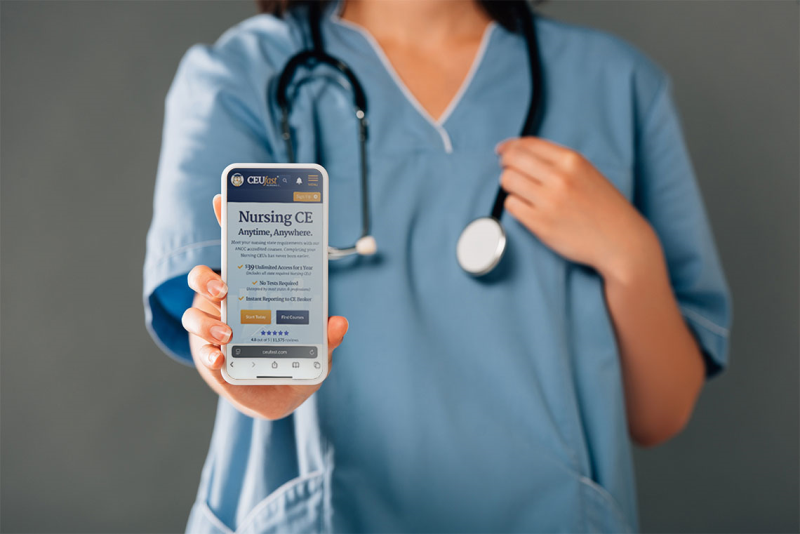
Ongoing professional development plays a vital role in supporting safe practice, sound clinical judgment, and high-quality patient care. To help healthcare professionals stay current, CEUfast regularly updates its course catalog with timely, evidence-based education that reflects real-world practice needs and emerging areas of focus.
This month's new and revised courses address several important aspects of patient care and professional responsibility, including GLP-1 receptor agonist therapy, disaster preparedness and emergency response, Lynch syndrome, recognition and reporting of elder and dependent adult abuse, palliative care principles, and culturally competent care. These updates are designed to strengthen clinical confidence, support effective patient education, and promote safe, equitable care across a wide range of care settings.
New Course
Navigating GLP-1 RA Therapy
This new continuing education course provides nurses with an evidence-based overview of glucagon-like peptide-1 receptor agonists (GLP-1 RAs), including approved indications, mechanisms of action, and commonly prescribed agents for pediatric and adult patients with type 2 diabetes and obesity. Learners will strengthen clinical decision-making by examining barriers to therapy adherence and developing patient education strategies focused on safe administration, side effect management, and sustainable lifestyle modifications to support successful treatment outcomes.
Disaster Preparedness
Designed to strengthen emergency preparedness and response competencies, this continuing education course equips nurses with foundational knowledge in disaster identification, assessment, and management across a range of natural and man-made events. Participants will develop practical skills in hazard vulnerability assessment, incident command systems, and mass casualty response, supporting safe, coordinated decision-making in high-risk and rapidly evolving care environments.
Lynch Syndrome
Focused on advancing genomic literacy and precision-based care, this continuing education course prepares nurses to recognize the genetic foundations, diagnostic criteria, and clinical implications of Lynch syndrome. Learners will enhance their ability to support hereditary cancer risk assessment, interpret key diagnostic markers, and apply evidence-based screening and treatment strategies while integrating patient education, social determinants of health, and personalized care planning into clinical practice.
Revised Courses
Dependent Adult Abuse (Elder Abuse)
Emphasizing patient safety, ethical practice, and regulatory responsibility, this revised continuing education course strengthens nurses' ability to recognize, assess, and respond to elder abuse across care settings. Learners will examine risk factors, clinical indicators, legal obligations, and mandatory reporting requirements while reinforcing the professional role in early detection, prevention, and protection of vulnerable older adults.
Dependent Adult Abuse (Elder Abuse) for CNAs, HHAs, and MAs
Tailored for Certified Nursing Assistants, Home Health Aides, and Medical Assistants, this continuing education course reinforces essential competencies in recognizing and reporting dependent adult and elder abuse. Participants will build practical awareness of cultural considerations, risk factors, types of abuse, and observable warning signs, supporting timely intervention and appropriate reporting to promote patient safety and quality of care.
Palliative Care: Relief, Support, and Quality of Life
Centered on improving comfort, quality of life, and patient-centered decision-making, this revised continuing education course provides an evidence-based overview of palliative care and its role in supporting individuals with serious or life-threatening conditions. Learners will differentiate palliative and hospice care, examine symptom management strategies, ethical considerations, and health disparities, and apply core palliative principles to clinical scenarios to strengthen interdisciplinary, compassionate care delivery.
Cultural Competency: Current Practice
Focused on promoting inclusive, patient-centered practice, this revised continuing education course strengthens nurses' understanding of cultural competence and its application across diverse care settings. Learners will explore core cultural concepts, culturally and linguistically appropriate services, models of care, and foundational LGBTQ+ terminology to support respectful communication, equitable care delivery, and improved patient outcomes.
Cultural Competency for Nursing Assistants, Home Health Aides, & Medical Assistants
Designed for Certified Medication Assistants, Certified Nursing Assistants, Home Health Aides, and Medical Assistants, this revised continuing education course builds foundational knowledge in cultural competence and respectful patient engagement. Participants will strengthen awareness of cultural factors, appropriate communication services, models of care, and essential LGBTQ+ terminology to support effective communication, equitable treatment, and high-quality care across diverse populations.
