The first thing you'll notice is it's dark, middle of the night dark. And then youll wonder if your most recent memory was real or simply a dream your brain made up. Then, it's the sound. Is that part of the dream, or is that really happening? Why is it so obnoxious? Suddenly, it hits you... It's your beeper, and it's time to go to work.
The clock reads 1:52 am. Your dog lifts his head, and you offer him a pet as you jump into your nearest pair of pants. He's used to the sound by now and relaxes, knowing you'll likely be home in a few hours after hearing the strange sound that sometimes awakens him in the night. As we say, when you work in the cath lab, your family works in the cath lab too. Dogs included.
A career in the cardiac catheterization lab is equally rewarding as it is demanding. As a cath lab nurse, you will be a part of a team that saves lives and improves the quality of life for patients every single day. Your job as a procedural nurse will offer you a different lens through which you view patient care, but your impact will remain substantial.
What Does a Cardiac Cath Lab Nurse Do?
As a cath lab nurse, you are responsible for patient safety and advocacy prior to, throughout, and immediately following various procedures involving the heart and vascular system. These procedures include, but are not limited to: left heart catheterizations or coronary angiograms with or without stenting, peripheral angiograms, pacemaker implants, valve replacements, and electrophysiology procedures.
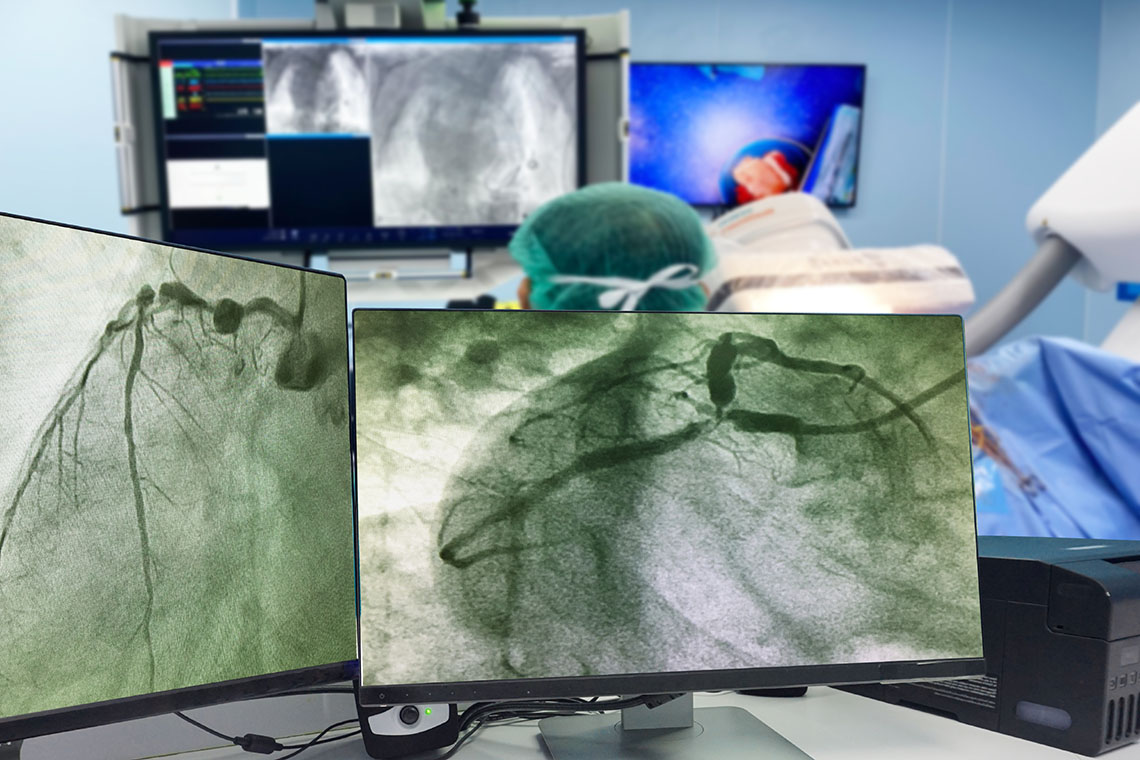
Procedures in the cath lab are sterile and use fluoroscopy (X-ray imaging), so you will often be standing and wearing a lead apron for most of the day. Similar to an Operating Room nurse, you will care for one patient at a time as they undergo a procedure within your department. You won't be alone, though! Often, cath lab teams consist of 3 or 4 staff members, plus a physician, whether an Interventional Cardiologist or an Electrophysiologist.
While the RN in the room is typically responsible for patient care and medication administration, other members of the team, often X-ray technologists, additional RNs, and/or RCIS (Registered Cardiovascular Invasive Specialists), will be scrubbed in with the doctor and operating the X-ray equipment, grabbing any necessary sterile supplies, and doing procedural documentation.
Teamwork in the cath lab is paramount for success, and one of the many reasons staff members find a home here. Working long hours alongside physicians and coworkers in a fast-paced, occasionally high-stress environment fosters trust and mutual respect. Many cath lab staff members credit themselves with the ability to have entire conversations with each other with eyes onlymasks covering our mouths have been a thing since before COVID-19. In addition, physicians will ask for advice from staff members, acknowledging they may be more familiar with equipment or techniques other doctors use in similar scenarios. This leads to an environment of lifelong learning and invaluable staff members.
A Typical Day for a Cardiac Cath Lab Nurse
Many days begin with routine, but that can change at a moment's notice if an emergency arises. Nurses working in the cath lab are responsible for patient and procedural preparation, including but not limited to:
- Reviewing pertinent history.
- Confirming patient allergies.
- Reviewing recent lab work (based on facility-specific policies and procedures).
- Confirming the patient's home medications, last doses taken, and their impact on the procedure (blood thinners, diabetic medications, diuretics, vasodilators).
- Verifying the accuracy and completeness of all procedural consent forms.
- Patient education regarding the procedure and expectations post-procedure.
In addition to reviewing information, cath lab nurses must also be excellent communicators with physicians and other members of their team. If a patient has an allergy to contrast or forgot to hold their Coumadin, the physician needs to be made aware prior to transfer to the cardiac cath lab. If the patient is allergic to latex or chlorhexidine, this needs to be communicated to your teammates, as certain equipment includes latex and many labs use chlorhexidine as an antiseptic.
Once the patient is in the cath lab, nurses maintain the role of advocate but shift from a pre-procedural to an intra-procedural approach. Before any invasive procedure begins, a time-out is performed. The time-out is vital to patient safety and confirms that everyone in the room agrees that the correct patient is receiving the correct procedure and that it is safe to move forward. All patients are connected to a cardiac monitor, end-tidal CO2 (EtCO2), SpO2, and blood pressure monitoring. Most patients will receive procedural sedation, and some procedures are done under general anesthesia. Depending on state and facility-specific policies and procedures, nurses may be responsible for administering procedural sedation under the direction and orders of the operating physician. Competence in procedural sedation and reversals is necessary to work as a nurse in the cath lab.
As the procedure continues, staff members are responsible for maintaining sterility and following safe radiation practices. Successful cath lab nurses will be detail-oriented, as many seemingly minor things will happen throughout the procedure that could lead to important things, and awareness is key. Often, physicians will give nitroglycerin inta-arterial or intracoronary. What will happen to the patient's blood pressure? If you reviewed the history and noticed the patient has severe aortic stenosis, is nitroglycerin still a safe medication to administer? In addition, monitoring the total volume of contrast given, as it is nephrotoxic, is important for all patients, but especially those with a history of kidney disease.
Cath lab nurses will also be expected to understand various hemodynamic waveforms and ultrasound images and note when abnormalities are present. Many different pieces of equipment are used in all of the procedures, and as time goes on, RNs will be expected to not only assist in preparing the correct equipment prior to procedures, but expert-level cath lab RNs are often able to anticipate and grab necessary supplies before they are asked for.
As the procedure comes to an end, many assessments will occur, although they aren't a traditional head-to-toe as one might think of with the word assessment. These include, but are not limited to:
- Sedation level
- Aldrete score
- Pain level and location
- Neurologic exam
- Vital signs
- Distal pulse check (radial or pedal pulses) with an assessment of distal circulation (capillary refill, color, temperature)
As with most surgeries, procedures, and transfers to different levels of care, a handoff should be done for patient safety. Patients may be transferred back to an outpatient unit for discharge later in the day, return to an inpatient telemetry room, or an intensive care unit (ICU) room, depending on their clinical status.
What On-Call Duty Looks Like for Cath Lab Nurses
Now lets revisit the scenario from before the darkness, the sound, but maybe not the dog. Staff members in the cath lab are required in most facilities to take what's called "call". This means a team is available for emergencies 24/7, 365 days of the year. Each facility is different, but the standard is typically that staff members who are called in have to be at work, prepared to work, within 30 minutes of the call. The reason for this is the patient's myocardium. Cath lab staff are typically called in for STEMIs or ST elevation myocardial infarctions. During a STEMI, the patient's heart muscle is dying, and we need to act fast to repair damage that is being done before patients develop lethal arrhythmias, cardiogenic shock, or other severe adverse events. The standard of care is a "door-to-balloon"time of 90 minutes.
Being on call can be stressful occasionally, but the satisfaction of truly saving someone is worth it every time. The best cath lab staff members are able to acknowledge that whatever they were doing prior to getting called in did not pale in comparison to the patient in front of them and their family members, who are having one of the worst days of their lives. The feeling of relief you see on the faces of family members once their loved ones are out of your hands and safely in the ICU is unmatched. As a cath lab staff member, you never have to wonder if your work impacts patients because you get to watch it happen every day.
How to Become a Cath Lab Nurse
As with any career as a Registered Nurse, the first steps are the same: get your degree and pass your NCLEX. After that, if cath lab nursing is your ultimate goal, a job in an ICU, particularly a cardiovascular ICU, would be best for at least 1-2 years. This will help you not only learn the skills of being a nurse but also gain exposure to ventilators, managing and titrating drips, and codes. Learn as much as you can about the cardiovascular system and cardiac rhythms. If you plan to work in the cath lab within your original hospital system, becoming familiar with the Cardiologists and Electrophysiologists is also helpful before you transition to the lab!
About the Author:
Chelsea McGrath is a registered nurse with nearly twelve years of experience in patient care and a passion for cardiac nursing and both patient and staff education. She obtained her Bachelor of Science in Nursing from Northern Michigan University in 2014, graduating summa cum laude. Since then, she has worked in a variety of nursing specialties, predominantly within the cardiac cath lab, including four years as a travel nurse. When she isn't providing direct patient care, she can often be found educating new staff members in her unit, acting as a preceptor for nursing students, and researching educational materials for new and experienced staff members.
Chelsea is an independent contributor to CEUfast's Nursing Blog Program. Please note that the views, thoughts, and opinions expressed in this blog post are solely those of the independent contributor and do not necessarily represent those of CEUfast. This blog post is not medical advice. Always consult with your personal healthcare provider for any health-related questions or concerns.
If you want to learn more about CEUfast's Nursing Blog Program or would like to submit a blog post for consideration, please visit https://ceufast.com/blog/submissions.