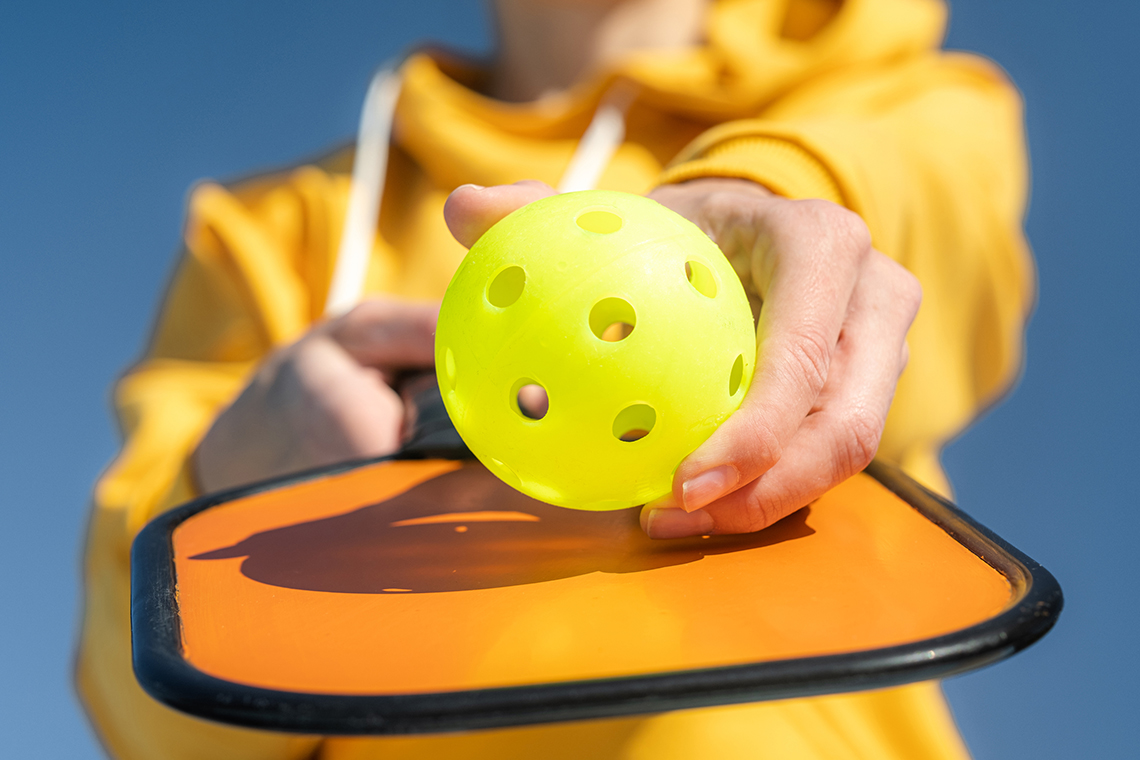
Pickleball is a fast-growing sport in North America. It is being promoted as a fun, low-impact activity for people of all ages, often seen as safer than contact or high-speed sports. But health providers are linking the game to unexpected injuries based on the number and severity of cases now showing up in clinics and emergency rooms.
Unlike tennis, where the larger court gives players more distance and reaction time, or basketball, where injuries result from contact, pickleball creates a unique injury profile driven by its distinctive court size, hard paddles, and fast plastic ball. Besides having a unique injury profile, players are experiencing serious eye trauma that can threaten vision, not just minor irritation.
This article emphasizes less recognized but significant injuries such as corneal abrasions, orbital fractures, and retinal detachment, along with other injuries shown to occur in players. It outlines key warning signs that require prompt medical evaluation and highlights evidence-based prevention strategies, including safe playing practices such as protective eyewear, to help players stay healthy on the court.
The Pickleball-Specific Injury Pattern: What Makes This Sport Different
The game may look simple, but its mix of small court dimensions, hard paddles, plastic balls, and an aging population of players creates a perfect storm for certain injuries that are far less common in tennis, badminton, or squash. Pickleball creates a unique injury profile driven by its distinctive characteristics, as listed below.
Crowded Net Play: The Kitchen Line Effect
On a pickleball court, players position themselves just seven feet from the net in the non-volley zone, known as the kitchen, which puts them at least 14 feet from their opponents. The popular third-shot drop strategy brings both players rushing toward this line, so fast balls and paddles are traveling at close range.
Hidden Achilles Tendon Strain: Its Just a Fun Game
Because it feels like a casual, social sport, players skip warm-ups, play for hours without rest, and ask more of their Achilles tendons than their conditioning can handle. When the Achilles tendon ruptures, the calf weakens, making it difficult to push off the ground or stand on tiptoe. This requires immediate medical attention and may require surgical repair.
Backward-Moving Falls: Unique to Overhead Returns
Picture this: A player is backpedaling to chase a high lob, eyes locked on the ball and attention pulled away from the court lines, partner, and surrounding players. This backward movement, uncommon in forward-moving sports, makes it easy to lose balance, trip, or collide, leading to sudden falls.
On a hard pickleball court, these falls can end with the player landing on an outstretched arm, which can cause distal radius (wrist) and humerus fractures, elbow or shoulder injuries, and serious head or hip trauma. Because of the natural effects of aging, such as loss of balance, slower reflexes, and weaker bones, older adults are more susceptible to backward falls, and these falls can be more damaging.
Stacking and Partner Collisions in Doubles Play
In doubles pickleball, many teams use a stacking strategy, starting on the same side of the court before the serve and then shifting into position. On a small court, this tactical movement makes it more likely that partners will converge on the same ball, increasing the risk of collisions in ways that are far less common in tennis doubles, where there is more space.
These collisions can cause significant facial trauma, including broken noses, dental injuries, and blunt injuries around the eyes and forehead.
The impact may come from bodies colliding or from an accidental strike with a partners or opponent's paddle. These paddles, swung with force, can hit the face, eye area, hands, or head and contribute to eye injuries such as corneal abrasions and orbital fractures.
The Eye Injuries You Should Know About
Emergency room visits for pickleball-related eye injuries have climbed, with an estimated 1,262 cases in 2024, and most documented injuries occurring in adults over 50. Among these, several forms of vision-threatening trauma stand out as especially important for players to recognize.
Corneal Abrasion: The Most Common Injury
A corneal abrasion is a common pickleball eye injury and makes up a substantial portion of the eye injuries reported in players.
When you need immediate medical attention:
- Burning, gritty sensation that feels like sand grinding against your eye with every blink.
- Tears flowing beyond your control.
- Inability to tolerate even dim lighting, you want to retreat to a dark room.
- Red, bloodshot appearance around the cornea.
- Blurred vision, as though looking through a foggy window.
- Your eyelids keep spasming shut.
If you experience these symptoms after taking a ball to the face, seek medical attention. Your eye doctor can check for abrasions using special dye and prescribe antibiotic drops to prevent infection.
Retinal Detachment: A Vision-Threatening Emergency
Retinal detachment is a serious injury that happens when the retina pulls away from the tissue that nourishes it. The fact that retinal detachment may not be painful underscores its severity, an emergency that requires prompt surgery to prevent irreversible vision loss, making visual symptom recognition vital.
Warning Signs Requiring Immediate Emergency Care
Seek immediate emergency carethe same day, not next weekif, after a ball hits your eye, you notice:
- A sudden shower of new dark floaters, as if dozens of tiny flies, specks, or cobwebs are drifting across your vision.
- Flashes of light in one eye, especially in the peripheral vision, appear with no external light source.
- A dark shadow, veil, or curtain sliding across any part of your visual field.
- Noticeable dimming or loss of vision in one eye, as if someone turned down the lights or erased part of what you can see.
Orbital Fracture
The bones forming the floor and inner wall of the eye socket are thin and fragile, more like an eggshell than a thick shield. Significant force applied to the eye and its surrounding structures can cause these fractures. This can happen when a pickleball strikes the face at high velocity or during player collisions on the court. Recent analyses of pickleball-related eye injuries have noted an increase in serious cases such as orbital fractures, especially among players over age 50 who may have age-related bone density changes.
Signs of Orbital Fracture
Seek urgent medical evaluation if, after a pickleball impact to the eye or face, you notice:
- Your eyes no longer line up; one appears lower, sunken, or positioned differently than the other.
- You can feel a clear step-off, flattening, or deformity along the eye socket or cheekbone.
- Double vision that does not go away, even when you cover either eye one at a time.
- New numbness or tingling along the cheek, upper lip, or upper front teeth on the injured side.
- Rapidly worsening bruising and swelling are spreading around the eye.
- Sharp pain in or around the eye socket when you try to look up, down, or to the side.
- The eye seems stuck and cannot move fully in certain directions.
- Nausea or even vomiting that is triggered when you attempt to move your eyes.
- A crackling sensation or tiny air bubbles under the skin around the eye, especially after blowing your nose.
Treatment Options
Seek immediate medical attention if you suspect an orbital fracture. Physicians might identify slight fractures, or there could be more severe injuries if limited eye movement occurs or if the fractures impact sight.
Evidence-Based Prevention Strategies: Protecting Yourself on the Court
Even though people view pickleball as a casual game, its injury risks are serious enough that players should prepare just as carefully as they would for tennis or squash. Before stepping onto the court, evidence-based strategies focus on three areas: protective gear, warm-up and conditioning, and smart play habits.
Wear Protective Eyewear
The American Academy of Ophthalmology recommends protective eyewear for all racquet and paddle sports, including pickleball. Appropriate sports protective eyewear can prevent up to about 90% of serious sports-related eye injuries in racquet and paddle sports.
Features to Look For
- When choosing goggles or glasses, look for these evidence-based features:
- Protective sports eyewear that meets Advancing Standards Transforming Markets (ASTM) standards for eye protection in racquet and paddle sports (often labeled ASTM F803 or a current racquet-sport specification).
- Polycarbonate lenses are impact-resistant and up to 10 times stronger than standard plastic lenses.
- Wraparound design that shields the front and sides of the eyes, protecting against balls and paddles coming from an angle or into the peripheral vision.
- Snug, gap-free fit with an adjustable strap or temples so the eyewear stays in place and does not slide during quick movements.
Prescription-ready options (or prescription inserts) for players who need vision correction, so they do not have to choose between clear vision and eye protection.
Proper Warm-up and Conditioning
Sports medicine research shows that regular warm-up and conditioning routines lower injury rates across many sports, and experts now recommend applying these same principles to pickleball.
Pre-Game Warm-Up Routine
Before each game, it is helpful to spend 10 to 15 minutes preparing the body. Start with three to five minutes of light cardiovascular activity, such as brisk walking, easy jogging, or gentle jumping jacks, to raise the heart rate and increase blood flow to the muscles. Follow this with dynamic movements: arm circles, leg swings, torso twists, and walking lunges to loosen the shoulders, hips, knees, and ankles. Begin with short, easy rallies at mid-court and build toward full-speed, competitive play once your body feels warm and responsive.
Conditioning Between Play Sessions
Between pickleball days, conditioning work further reduces injury risk. Strength training that targets the legs, core, and rotator cuff improves joint support and helps protect against falls, wrist fractures, and shoulder strains. Balance exercises, such as single-leg standing or heel-to-toe walking, are especially important for preventing backward-moving falls when chasing lobs.
Regular flexibility work for the calves, hamstrings, hip flexors, and shoulders helps maintain range of motion and reduces stress on the Achilles tendon. Building general cardiovascular fitness with walking, cycling, or swimming also improves aerobic capacity so that longer rallies and multiple games place less strain on the heart, lungs, and muscles.
Equipment Selection
Equipment, footwear, and court surface are other important safety strategies in pickleball. Choosing equipment that matches the player's strength, skill level, and playing environment is crucial.
Choosing the Right Paddle
Using a lighter paddle eases shoulder and wrist strain but needs a stronger swing for power; a heavier paddle offers more power but puts more stress on your joints. Selecting a paddle weight that feels comfortable for your current strength and experience helps limit overuse injuries. A grip that is too small or too large encourages excessive squeezing and can contribute to forearm and elbow pain.
Selecting Proper Footwear
Court-specific shoes provide lateral support for side-to-side movements, non-marking soles with traction for indoor or outdoor pickleball surfaces, and enough cushioning to absorb impact without feeling unstable. Players should replace shoes, since worn-down cushioning and tread reduce shock absorption and increase the risk of slips and overuse injuries.
Court Surface Considerations
Well-maintained courts offer consistent traction, while surfaces with sand, debris, cracks, or irregularities raise the risk of trips, ankle sprains, and falls. Taking a moment before each session to confirm that your paddle, shoes, and court surface are appropriate and in condition is a practical way to reduce injury risk before the first serve.
Safe Play Considerations
Smart court habits are just as important as equipment for preventing pickleball injuries.
Communication and Positioning
In doubles play, partners should communicate by calling mine or yours and agreeing on court positions before the serve so they are not chasing the same ball or stepping into each other's swing path. Staying out of an opponent's strike zone and keeping the paddle up in front of the body in a ready position at the kitchen line can help block errant shots and reduce the risk of blows to the face and head.
Situational Awareness
Players should maintain an awareness of where everyone is on the court during net exchanges, keep their eyes on the ball, and avoid turning their backs on play. Matching games to an appropriate skill level also matters; beginners are safer learning with other beginners rather than facing advanced players who hit harder.
Listening to Your Body
Short breaks between games allow players to hydrate, check how they are feeling, and stop before fatigue leads to slow reactions, poor footwork, and avoidable falls. Pain during play is a signal to stop, not to push through.
Environmental Safety Checks
A quick scan of the surroundingsmaking sure the court is dry and free of debris, that there is enough space behind the baseline, and that lighting is adequatecan prevent many of the trips, slips, and backward-moving falls that send players to urgent care
Special Considerations for Older Players
Pickleball players over 50 carry a higher risk of fractures, falls, and cardiovascular events. Recent data show that most documented pickleball-related eye injuries occur in this age group. Extra safety precautions are important.
Medical Clearance and Health Habits
Before engaging in or increasing pickleball activity, it would be prudent for older individuals, especially those with pre-existing conditions such as heart disease, high blood pressure, diabetes, or a history of stroke, to seek advice from a healthcare professional. Your clinician can review medications, screen for osteoporosis or balance problems, and advise on safe intensity, including whether singles or doubles are a better fit for your fitness level.
Maintaining Bone Health
Maintaining bone health with adequate calcium and vitamin D intake, weight-bearing exercise, and treatment of osteoporosis, where appropriate, lowers the risk of serious fractures if a fall occurs.
Safer Play Choices for Older Players
Doubles involves less running and fewer high-intensity bursts than singles, so experts suggest that older players start with doubles to reduce overexertion and fall risk while still gaining cardiovascular benefits.
Balance Training for Fall Prevention
Structured balance training, such as single-leg stance, tandem walking, and targeted exercises from physical therapy or senior fitness programs, can address the backward-moving falls that are especially common in pickleball when chasing lobs.
In Review
Pickleball offers excellent health and social benefits. But the sport's unique design creates real risks players must understand. The compact court, fast ball speed, and close-range play combine to produce injuries that may be less expected compared with other racquet sports.
Eye injuries pose the greatest risk. Some, like minor corneal abrasions, can heal within days, while others, including fractures around the eye and damage to the retina, may require surgery and can lead to permanent vision loss if not treated promptly. Players who recognize early warning signs such as sudden vision changes, persistent pain, or unusual floaters can seek treatment before minor injuries become major complications.
Prevention works. Appropriate sports protective eyewear can prevent up to about 90% of serious sports-related eye injuries in racquet and paddle sports. Proper warm-ups, court awareness, and gradual skill progression protect against musculoskeletal trauma. These simple strategies let players enjoy the game while minimizing preventable harm.
The goal is safer play, not avoiding the sport. With proper precautions and injury awareness, players of all ages can continue enjoying pickleball for years to come.
About the Author:
Glenel Loring is a dedicated nurse transitioning into freelance health writing. With 20 years of bedside nursing experience, Glenel deeply understands healthcare. She is now looking to apply her medical expertise to craft engaging, informative content for diverse audiences. Glenel's writing highlights her ability to make complex health topics accessible and relatable. Her interest in herbal supplements as alternative health solutions showcases her dedication to lifelong learning. As a mother of two and avid gardener, Glenel brings a personal touch to her work. With her strong nursing background and emerging writing skills, Glenel seeks opportunities to help brands and publications educate and empower readers to take control of their well-being.
Glenel is an independent contributor to CEUfast's Nursing Blog Program. Please note that the views, thoughts, and opinions expressed in this blog post are solely those of the independent contributor and do not necessarily represent those of CEUfast. This blog post is not medical advice. Always consult with your personal healthcare provider for any health-related questions or concerns.
If you want to learn more about CEUfast's Nursing Blog Program or would like to submit a blog post for consideration, please visit https://ceufast.com/blog/submissions.