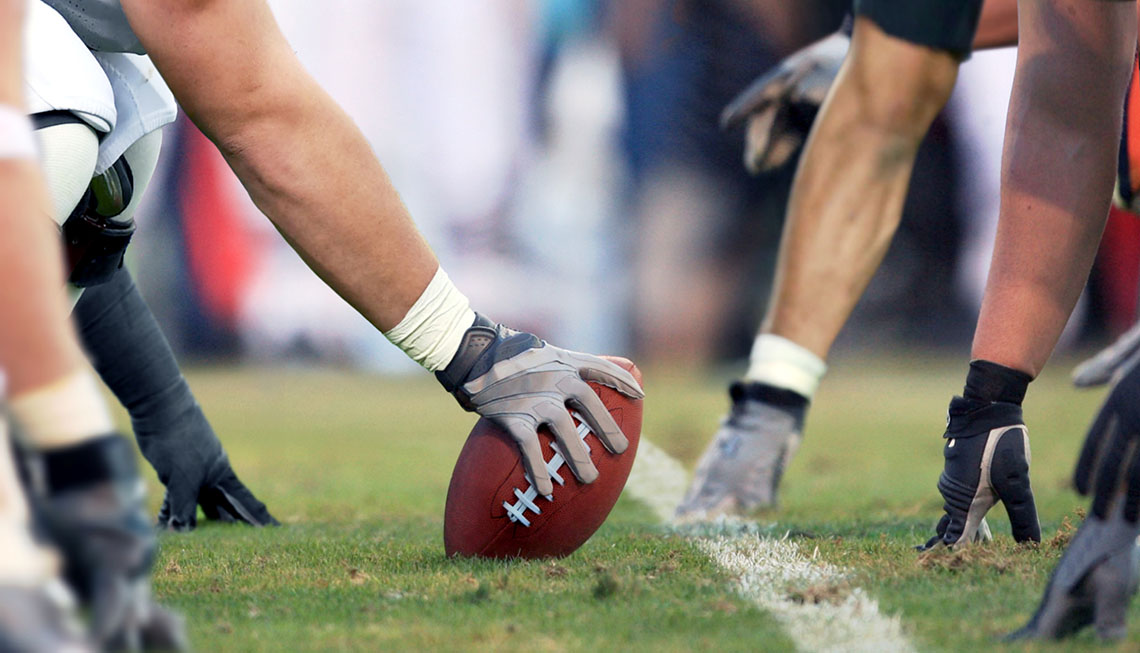
Football is the most-watched sport in America and is becoming increasingly popular around the world. Soon, many eyes will be watching as Super Bowl LX approaches. With a major cultural event like the Super Bowl, fans and even casual viewers prepare to be entertained on Super Bowl Sunday.
Whether you are interested in the sport, the commercials, or the halftime entertainment, you will be invested. While the day is full of entertainment, there can only be one champion on the football field. So, what does it take to be the last team standing? Some may say hard work, a little luck, and considerable perseverance. No matter what it takes, we are going to look at the price of winning from a different perspective. Well talk about understanding chronic traumatic encephalopathy, or better known as CTE, signs and symptoms of head trauma, the correlation of football and contact sports on head trauma, and how to prevent head trauma.
What is Chronic Traumatic Encephalopathy?
CTE has gotten a lot of buzz lately due to the uprise in funding and recent research surrounding football injuries. CTE is a neurodegenerative disease that is the cause of repetitive head trauma. This can affect anyone with known repeated head trauma, such as rugby, ice hockey, or soccer. However, it is most commonly found in football players.
Not all head traumas can lead to a concussion. A concussion is defined as a mild traumatic brain injury that results in temporary disturbance of the brains function. The acute injury of a concussion can be managed, while CTE is a disease that appears later in life. While not every impact warrants a true diagnosis of a concussion, it is the repetitive trauma that is associated with CTE.
Another fact that is important to know is that CTE is only diagnosed postmortem. The brain has to be dissected and tested for protein buildup. If there is an abnormal amount of this tau protein, then the disease can be confirmed. There is currently no test or images to diagnose or cure CTE.
History of CTE
This discovery of head trauma was first noticed by Dr. Maryland, who was a trained pathologist. Dr. Maryland coined the term punch drunk in 1928 to describe his observation and clinical theory of boxers. He believed that head trauma was associated with physical and cognitive changes. Punch drunk did then evolve to dementia pugilistica, and finally CTE.
CTE was discovered by Dr. Omalu in 2011. This finding revolutionized the understanding of how the brain receives trauma. This new discovery was first recorded in the case of four-time NFL Super Bowl champion Mike Webster. This postmortem diagnosis in such a profound athlete was a light that sparked more research to be done in football players. A recent longitudinal study of NFL players who donated their brains showed that 91.7% of American football players had a diagnosis of CTE.
Athletes such as NFL player Aaron Hernandez, young college athlete Owen Thomas, and the most recent discovery of the first professional female athlete, Heather Anderson, were all affected by this degenerative disease. CTE is forever a shocking diagnosis, but to some family members of these individuals, they witnessed the signs and symptoms.
Symptoms
CTE is classified as a degeneration of the brain, so patients often experience cognitive changes. This may include mood changes, personality changes, and often aggression and mood swings. Symptoms can also include memory loss, confusion, and coordination deficits. This is where pathologists will classify CTE in 4 stages. These 4 stages are pathological by how much tau protein is spread, enlargement of the lateral ventricles, atrophy of the frontal lobe, and/or a reduction in brain weight.
While each researcher has theorized a clinical stage of CTE, there is no definite diagnosis for the disease in a living patient. Research has shown that cognitive changes can occur months, years, or decades after the last traumatic head injury or trauma. Research from Montenegro proposed traumatic encephalopathy syndrome (TES), which should be used for research as classifications for probable CTE and possible CTE. This finding reports cognitive, behavioral, and mood symptomatology in patients. This also includes impulsivity, anxiety, apathy, paranoia, suicidality, headache, motor signs, documented decline, and delayed onset.
While concussions may have similar symptoms, they are most noticeable within the first 48 hours of a head injury. The most common symptom of a concussion is a headache. Other serious signs and symptoms are seizures, focal neurological deficits, sleep dysfunction, and/or loss of consciousness. Concussion symptoms are often resolved quickly (10-14 days) and can be managed by a medical team. However, concussions can result in neurological changes if not treated properly.
Sports and Head Trauma
Physical activity is a beneficial habit that all individuals should be completing. The American Heart Association (AHA) recommends 150 minutes per week of moderate-to-vigorous aerobic activity, or 75 minutes per week of vigorous aerobic activity. When it comes to 6-17-year-olds, the AHA recommends 60 minutes per day. Most kids are getting this completed by being involved in sports. 27.3 million youth participate in team sports or take sports lessons. This is roughly 55% for kids between the ages of six and seventeen. The goal for the U.S. Department of Health and Human Services is to have 63% of kids in sports by 2030.
With the potential growth in sports participation, the public needs to be educated on the data on injuries involved in sports. Research shows that approximately 90% of athletes reported an injury during sports. One of the most common injured areas were head and face. Concussions accounted for 21% of injuries sustained in sports. The CDC estimates 1.4 to 3.8 million concussions per year.
Typical contact sports, such as soccer, rugby, football, lacrosse, and ice hockey, had higher rates of concussion incidence. Football consists of the highest number of concussions, and females were seen with higher rates of concussions. Findings from Crisco et al research show that an average football player can receive a traumatic event 14.3 times during a competitive game. Due to these high variables/numbers, a football player would have a high chance of a concussion and even further changes, such as a diagnosis of CTE.
Prevention
It is the duty of all stakeholders to be involved in the safety of the sport. Competition is fun, but if not done in a safe manner, then it is not worth it. Everyone has a part to play in player safety. From organizations, coaches, support staff, officials, health care team, family, friends, and loved ones. Management of head trauma requires an interprofessional team approach so we can protect the game and its players. Former family members speak on the fact that they wish they had done more to help their husband, daughter, son, or brother. Oftentimes, it is this core group that first sees the head trauma and the impact it has on the individual.
Parents of Wyatt Bramwell, an 18-year-old football player diagnosed with CTE, were quoted ..we couldnt recognize possibly what was happening with him until it was too lateIt makes you evaluate everything you ever did. Another parent of 2 sons with CTE stated, You are either the problem or a part of the solution to the problem.
Any time an athlete is suspected of a traumatic brain injury, they should be removed from competition and evaluated by a healthcare provider. The sooner an athlete is evaluated, the better the chance of recovery and a quicker return to play. A common evaluation and assessment tool is the Sport Concussion Assessment Tool (SCAT). This tool allows healthcare providers to assess cervical spine, ocular/motor function, memory, symptoms, cognitive, and balance. When in doubt, sit them out. This catchy phrase should help with remembering the consequences of competing with a head trauma or concussion.
One important ramification of continuing to compete after sustaining a head injury is second impact syndrome. Second impact syndrome occurs when the brain receives another traumatic event before recovering from the previous head injury. This rare phenomenon can lead to rapid brain swelling and cause severe brain damage or death. This is why removal from play is important after sustaining a head trauma. This provides time to assess an injury and determine whether further damage could occur if athletes are returned to competition.
Conclusion
Sports and physical activity have many short and long-term benefits. The most common benefits are weight loss, stronger bones and muscles, a healthy heart, and keeping the mind sharp. Sports also offer social benefits. Teamwork, communication, discipline, time management, leadership, and social connections are benefits of sports.
Sports and physical activity should never be discouraged. Precautions should be established to ensure that any reward entails some risk. Research is geared to keeping athletes on the field. The study of traumatic brain injuries and the aftermath diagnosis of CTE is forever growing with research easily surpassing the rate of a Super Bowl commercial.
While the Super Bowl is entertaining and considered a monumental event, we should be reminded of all the work and sacrifice it takes to make it to the championship. So no matter the score at the end of the game, the safety of the game should always come first. This allows for an athlete to be able to play their sport at the highest level. So enjoy the big game and know that when an athlete gets removed for an evaluation, it is so that they can play safely.
About the Author:
Caelan Williams MAT, LAT, ATC is a certified athletic trainer. Caelan is at Mayo Clinic in Jacksonville, Florida. You can find him in the Regenerative Medicine Department helping with research and interprofessional collaborations. Caelan earned a Bachelors of Arts in Exercise Science from Warner University and obtained a Master of Athletic Training in from Manchester University.
Caelan has past professional experience in the college setting, professional level and volunteering with local high schools and recreational leagues.
Caelan is an independent contributor to CEUfast's Nursing Blog Program. Please note that the views, thoughts, and opinions expressed in this blog post are solely of the independent contributor and do not necessarily represent those of CEUfast. This blog post is not medical advice. Always consult with your personal healthcare provider for any health-related questions or concerns.
If you want to learn more about CEUfast's Nursing Blog Program or would like to submit a blog post for consideration, please visit https://ceufast.com/blog/submissions.