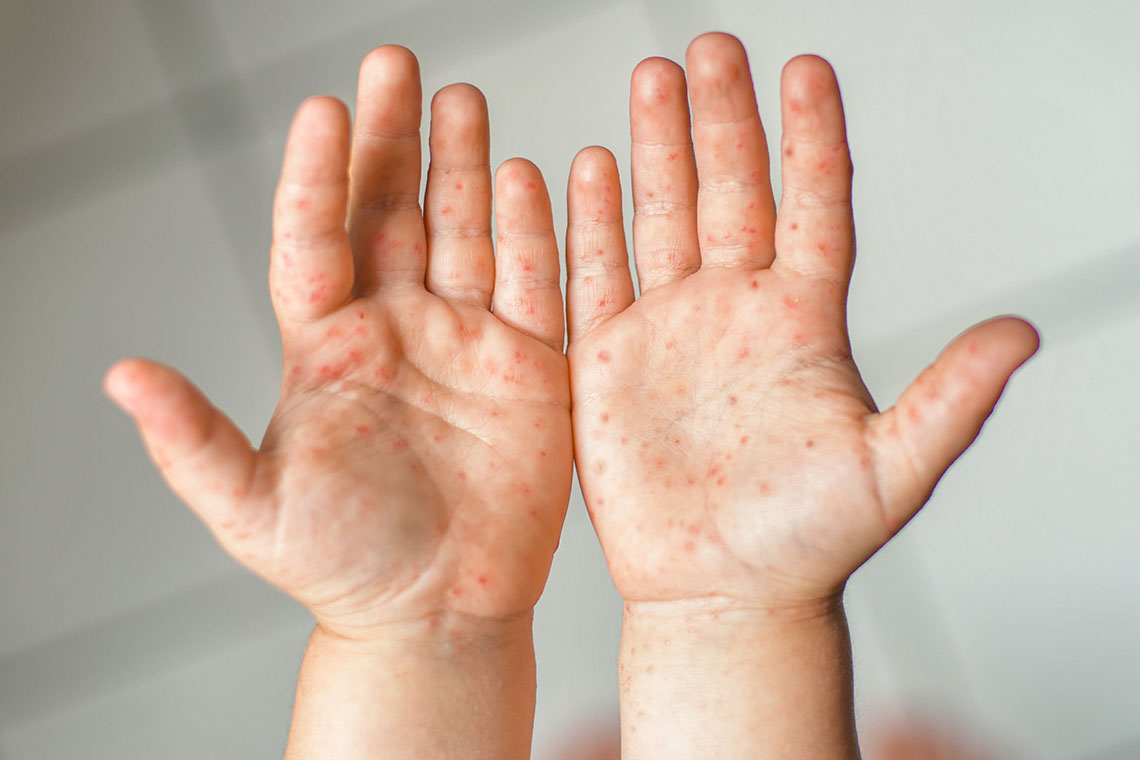
Painful mouth sores and a rash on the palms of the hands and soles of the feet are hallmarks of an illness dreaded by parents. This illness is known as hand, foot, and mouth disease.
What is hand, foot, and mouth disease (HFMD)? What does it look like? Who can contract it and how? Can it be treated or prevented? These are some of the questions nurses and parents find themselves asking as hand, foot, and mouth disease becomes more prevalent in schools, homes, clinics, and healthcare settings.
HFMD is caused by coxsackieviruses, with coxsackievirus A16 and enterovirus A71 being the most common causes of HFMD. HFMD typically affects younger children, but anyone of any age can contract it. 90% of cases occur in children under the age of 5. Outbreaks occur most frequently in the summer and early fall, when the virus can thrive in warm weather and spread at social events.
Is hand, foot, and mouth disease contagious? Most definitely.
HFMD is spread through contact with infected bodily fluids and secretions, including saliva, mucous, fecal matter, and fluid from the blisters caused by the virus. Transmission can occur from interacting with someone with the disease or by touching a contaminated surface. It often runs rampant through settings such as schools, summer camps, activities, and daycares, where many young children can easily spread the illness to one another at a rapid rate.
Symptoms to Watch For
HFMD symptoms can be uncomfortable and unpleasant. As its name suggests, individuals with hand, foot, and mouth disease present with painful mouth sores and a distinct rash on the hands and feet. The rash on the hands and feet can consist of fluid-filled vesicles or tiny bumps and may appear red, white, or even gray, depending on skin tone. Typically, symptoms appear 3-6 days after being infected and can last 7-10 days. Not everyone will present with all of the symptoms of HFMD, but important symptoms of the disease to know include:
- Fever
- Sore throat
- Fussiness or irritability
- Painful sores in the mouth
- Rash on the hands and feet, sometimes spreading to the groin, buttocks, or torso (some may not present with a rash)
- Decreased appetite
- Malaise
Hand, foot, and mouth disease in adults is usually much milder in nature. Some adults may have minor symptoms or may even be asymptomatic. It is believed that this may be linked to previous exposure in life and the production of antibodies. Adults can still get infected with a strain they havent been exposed to before, so precautionary measures are always recommended.
Individuals are the most contagious during the first week of symptoms, when a fever is still present, or within 24 hours of having had a fever. Individuals can remain contagious for weeks after symptoms resolve, and the virus can remain in fecal matter. Due to this, proper handwashing after using the restroom can help avoid spreading the disease.
Treatment Approaches and Symptom Management
Treatment for hand, foot, and mouth disease includes symptom management, medications to decrease pain and increase comfort, encouragement of fluids and hydration, and rest. Ibuprofen and acetaminophen may be recommended for pain and fever, and some specific mouthwashes can be used for mouth sores. If itching is associated with the rash, consult with a medical provider, as an over-the-counter hydrocortisone cream may relieve the itching. Always consult a doctor before utilizing medications to determine safety and effectiveness.
Fluid consumption can be especially difficult for young children who have painful mouth sores and do not want to eat or drink. Parents should be educated to watch for any alarming signs of dehydration, such as lightheadedness, dry mucous membranes, poor skin turgor, decreased urine output or dry diapers, the absence of tears when crying, low blood pressure, rapid heartbeat, and lethargy.
Prevention Strategies
Prevention of HFMD in both pediatric and adult populations is rooted in avoiding contact with infected individuals, thoroughly washing hands with soap and warm water for at least 20 seconds, and routinely disinfecting surfaces when someone with the infection has been present. Avoid interacting with an individual with known HFMD until they are no longer contagious. Do not share food, drinks, utensils, or cups with those who are infected, as saliva can be transferred and lead to infection. Additionally, avoid touching ones face, as the mouth, nose, and eyes are portals of entry for infections. If you or your child has hand, foot, and mouth disease, avoid interacting with others and stay home from social gatherings to prevent the spread of the infection.
Herpangina vs. Hand, Foot, and Mouth Disease
Hand, foot, and mouth disease isnt the only illness caused by the Coxsackie virus. Herpangina is also caused by this virus and can cause similar ulcers in the back of the mouth. However, it does not cause a rash on the hands and feet that HFMD does. Herpangina can present with a sudden high fever and sometimes seizures. Nurses and healthcare professionals can benefit from understanding the differences between these illnesses because of their similarities and potential for misdiagnosis.
Conclusion
Hand, foot, and mouth disease is a viral infection that causes distinguishable, painful mouth sores and skin rashes, accompanied by fever and general discomfort. Hand, foot, and mouth disease typically appears in young children, but adults can also become infected. Nurses should strive to educate patients, families, and parents about HFMD to decrease community spread and help prepare those who do contract it to effectively manage their symptoms. Signs of dehydration should always be acknowledged and addressed.
Understanding how HFMD is transmitted can help prevent its spread, especially in close-quarter environments. Thorough handwashing and separation from infected individuals are recommended measures for preventing infection. Recognizing what HFMD is, how it presents, how it spreads, and how it can be prevented are critical steps in minimizing the spread of this unpleasant virus and avoiding those dreaded sores and rashes.
About the Author:
Rachel Pugmire is a registered nurse and freelance writer. She received her Bachelor of Science in Nursing in 2018, with a minor in gerontology. Her areas of expertise include emergency medicine, pediatrics, and pharmaceutical clinical trials. Medical writing has given her a platform to do what she is passionate about, which is educating patients, their families, and other healthcare professionals.
Rachel is an independent contributor to CEUfast's Nursing Blog Program. Please note that the views, thoughts, and opinions expressed in this blog post are solely those of the independent contributor and do not necessarily represent those of CEUfast. This blog post is not medical advice. Always consult with your personal healthcare provider for any health-related questions or concerns.
If you want to learn more about CEUfast's Nursing Blog Program or would like to submit a blog post for consideration, please visit https://ceufast.com/blog/submissions.