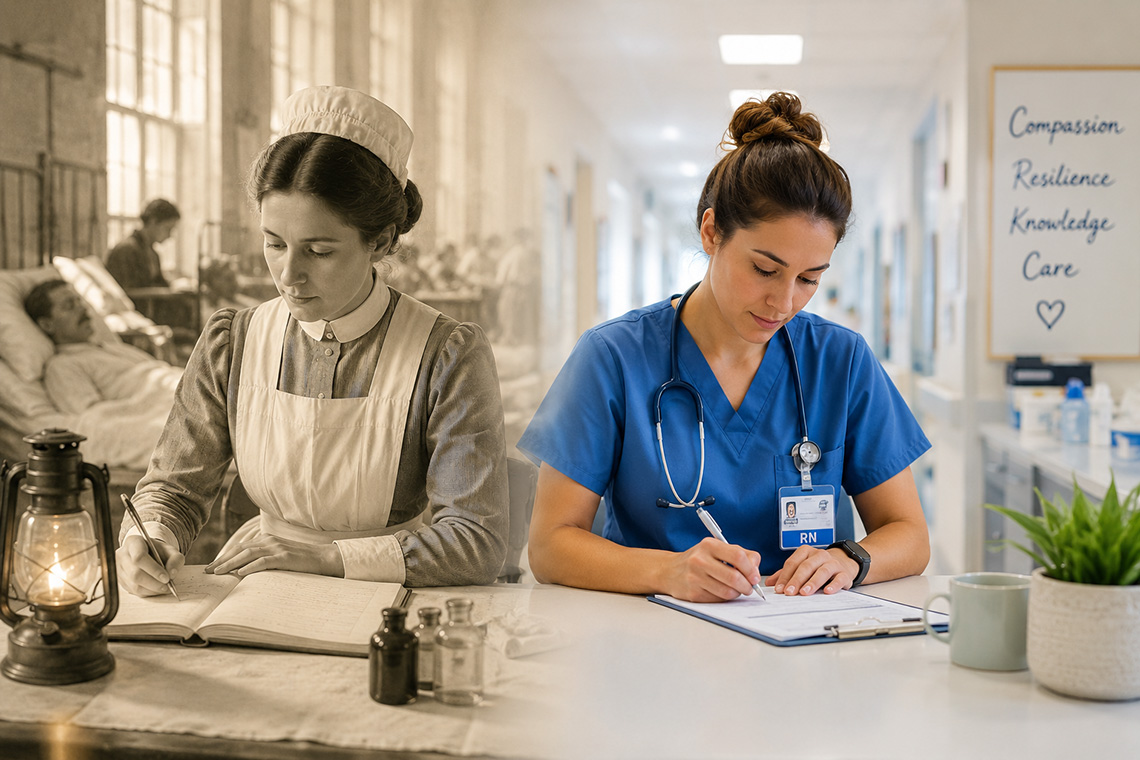
Nursing has long operated in high-stakes environments where the margin for error is small and the demands are continuous. While todays hospital floors are not literal battlefields, many of the pressures nurses face, including rapid decision-making, resource limitations, high patient acuity, and emotional labor, echo the conditions that shaped the professions development.
Examining this history provides useful context for understanding current challenges with mental fatigue, compassion fatigue, and recovery after shifts.
The Foundations: Crimean War and Florence Nightingale
Modern professional nursing emerged during the Crimean War (18531856). Florence Nightingale and a small group of nurses were sent to the British base hospital at Scutari, where soldiers were dying at alarming rates from infectious diseases.
Nightingale implemented systematic changes: improved sanitation, ventilation, nutrition, and basic hygiene protocols. She tracked mortality data meticulously and used statistical presentation (including her coxcomb diagrams) to demonstrate results. Within months, mortality rates declined dramatically as sanitation and public health measures improved.
Her work extended beyond the war. In 1860, she established the Nightingale Training School at St. Thomas Hospital in London, emphasizing education, observation, and evidence-based practice. Her writings, particularly Notes on Nursing (1859), stressed the nurses role in creating conditions that support healing. These principles, which included attention to environment, hygiene, and data, remain foundational.
Expansion During 20th-Century Conflicts
American nursing grew significantly through subsequent wars:
- Civil War (18611865): Thousands of women provided care with limited formal training. Figures such as Clara Barton (who later founded the American Red Cross) and Dorothea Dix helped organize hospital and battlefield care.
- World War I: Roughly 23,000 American nurses served, many near front lines, managing wound care, infection, and mass casualties under austere conditions.
- World War II: Approximately 78,000 American nurses were deployed across multiple theaters and developed expertise in triage, shock management, and care for traumatic injuries while working with frequent supply shortages.
- Vietnam War: Nurses faced unique challenges including guerrilla warfare, tropical diseases, and complex ethical situations, often with limited psychological support upon return.
These experiences accelerated the development of standardized training, specialty skills, and protocols still used today.
Practices That Transferred from War to Civilian Care
Many core elements of contemporary nursing practice originated or were refined in wartime settings:
- Standardized infection control and sanitation practices
- Triage and priority-setting frameworks used in emergency and critical care
- Structured nursing education programs that evolved into todays baccalaureate and graduate requirements
- Emphasis on adaptability, documentation, and interdisciplinary coordination under pressure
These adaptations improved outcomes in military hospitals and later influenced civilian hospital design, staffing models, and quality improvement processes.
The Continuing Human Cost
The mental and emotional demands have been consistent across eras. Historical nursing accounts describe exhaustion, grief, and difficulty separating from the work.
Today, these effects are more clearly quantified through workforce and occupational health research.
The National Academies of Sciences, Engineering, and Medicines The Future of Nursing 2020-2030 report identifies chronic workplace factors, including high workload, inadequate staffing, long shifts, and limited autonomy, as key contributors to nurse burnout, compassion fatigue, moral distress, and sleep disruption. These issues affect not only individual health but also patient safety, care quality, and workforce retention.
Recent studies have reported burnout rates among U.S. nurses ranging from 35% to 45% in many samples, with higher prevalence in high-acuity areas such as critical care and emergency departments. The COVID-19 pandemic further highlighted these strains, with nurses managing surges in patient volume, resource constraints, and high mortality under conditions that paralleled earlier crises.
Adaptation in Todays Context
Nurses continue to adapt. Current strategies include developing clearer boundaries between work and personal time, using structured handoff processes, and incorporating debriefing tools after difficult cases. Nurses are also prioritizing sleep hygiene, nutrition, brief recovery practices between shifts, and timely support through peer networks, counseling, or employee assistance programs.
The history of nursing shows that sustained high-pressure environments require both individual coping skills and organizational changes. Personal resilience alone is rarely sufficient when systemic factors remain unaddressed.
Moving Forward with Perspective
The professions development under pressure demonstrates that nurses have repeatedly contributed to meaningful improvements in care delivery, even in difficult circumstances. And it is a legacy that offers immense perspective: the fatigue many nurses experience is not a personal shortcoming but a predictable response to the nature of the work.
Recognizing these patterns can support more effective self-advocacy and recovery practices. It also underscores the value of continuing education that addresses both clinical skills and the human realities of sustained practice.
At the end of the day, understanding where nursing has come from can help clarify how best to protect its future, one nurse, one shift, and one system at a time.