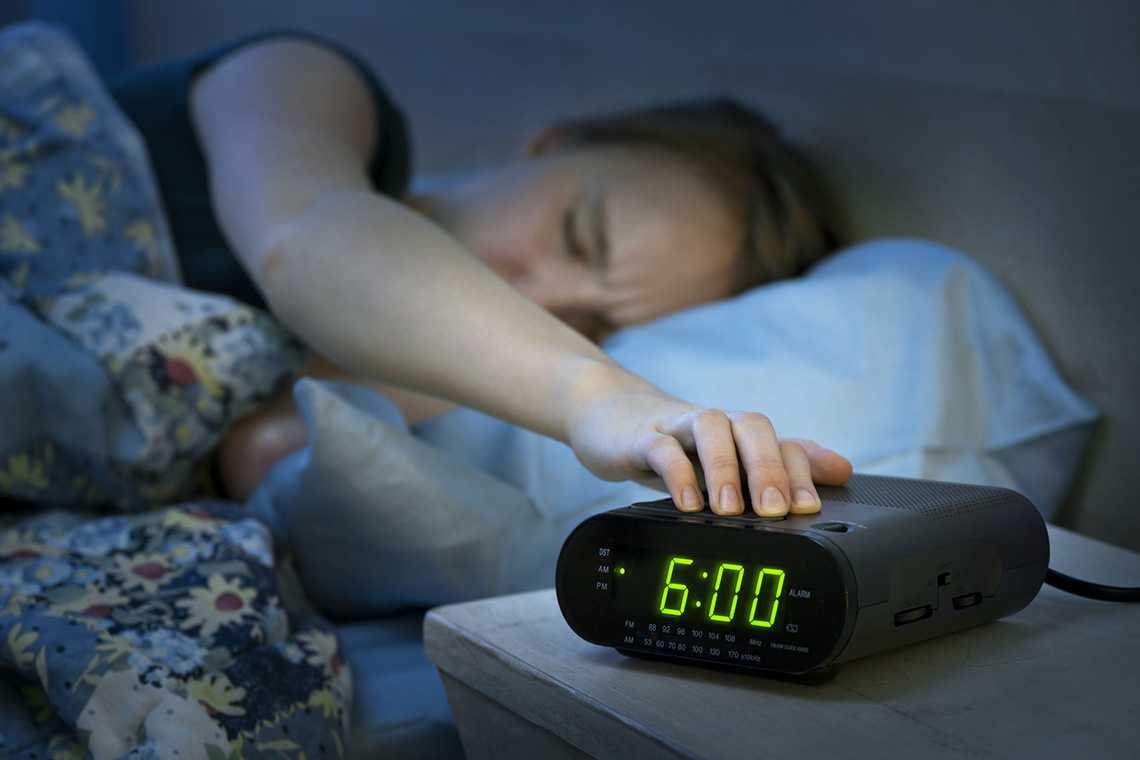
Countless studies have shown the importance of sleep in maintaining overall physical, mental, and emotional wellbeing. More recently, research has also examined the impact that social obligations such as work and school have on ones natural preferred sleep schedule (i.e., early birds vs. night owls) a concept known as social jetlag. This blog article explores social jetlag, explains how it is measured, reveals who is most vulnerable, and offers tips to reduce this common problem.
What is Social Jetlag?
Many factors play into a persons sleep schedule. However, there are three consistent cycles that have a large influence. These cycles are often referred to as clocks in scientific literature, as they tend to follow a 24-hour pattern. These three clocks are defined as follows:
- Biological clock: also called the circadian rhythm, this clock is governed by physiological
- mechanisms that dictate sleep and wake times
- Social clock: this clock is controlled by external social obligations, such as work or school
- Solar clock: this clock aligns with the rising and setting of the sun
Social jetlag occurs when ones biological clock and social clock are misaligned.
Calculating Social Jetlag
To quantify social jetlag, researchers typically compare sleep timing on workdays versus free days using the following concept:
Midpoint of sleep on free days midpoint of sleep on workdays = social jetlag
The midpoint of sleep is the halfway point between when you fall asleep and when you wake up.
For example, someone may naturally sleep from 11:00 PM to 8:00 AM on days off, giving a midpoint of 3:30 AM. On workdays, they may sleep from 9:00 PM to 6:00 AM, giving a midpoint of 1:30 AM.
Using the formula:
3:30 1:30 = 2 hours
This means the individual experiences about two hours of social jetlag. In research, a difference of around two hours or more is often considered a higher level of social jetlag and may be linked to greater health risks.
Healthcare providers should note that the social jetlag formula does not take into account cases of disrupted sleep or insomnia. This problem has brought criticism to both the concept and formula, but both still remain commonalbeit generaltools for quantifying sleep deficits in the field of sleep medicine.
What are the Symptoms of Social Jetlag?
Social jetlags prevalence, symptoms, and negative health impacts are likely underestimated, many articles note. This knowledge gap is due to the widely accepted notion that social jetlag is considered normal. It is prevalent in the general population and often is regarded as a lifestyle habitdespite its core mechanisms being highly similar to those of other circadian disruptions, a 2025 article explains.
Even so, some evidence suggests that high social jetlag has been associated with adverse symptoms and behaviors such as:
Research in the 2000s and 2010s led to conflicting conclusions regarding relationships between social jetlag and obesity, depression, high cortisol levels, high cholesterol, development of diabetes mellitus type 2, and insulin resistance. However, recent studies and meta-analyses have shown more consistent links between social jetlag and some of these conditions.
For example, a 2023 meta-analysis compiled information from 43 articles and found that social jetlag is positively and consistently associated with multiple obesity-related anthropometric measures. A 2025 meta-analysis published in BMC Psychiatry found that high social jetlag is significantly associated with depressive symptoms due to overactivation of the hypothalamic-pituitary-adrenal (HPA) axis and increased cortisol levels. Findings are still mixed on the impact social jetlag has on developing diabetes mellitus type 2 and insulin resistance. Some studies claim that there is a correlation between the two, while others have found no statistically significant association.
Social Jetlag vs. Circadian Rhythm Disruption vs. Sleep Deprivation
As established, social jetlag occurs when ones biological clock and social clock are misaligned. The biological clock, otherwise known as the circadian rhythm, is controlled by the suprachiasmatic nucleus (SCN) in the hypothalamus. The SCN controls some of the bodys physical, mental, and behavioral changes throughout the average 24-hour period of day and night. Circadian disruption refers to any misalignment or disturbance that affects the circadian rhythm. Therefore, social jetlag is a type of circadian disruption.
Consistent social jetlag can eventually lead to sleep deprivation. Sleep deprivation is defined as prolonged duration without adequate sleep. Inadequate sleep may be due to many factors, including insomnia, stress, sleep apnea, psychological disorders, certain medications, high caffeine intake, and alcohol use.
Sleep deprivation can cause symptoms of:
- Cognitive impairment
- Daytime sleepiness
- Fatigue
- Hallucinations
- Headaches
- Impaired judgement
- Impulsive behavior
- Irritability
Sleep deprivation has also been linked to increased risk of developing heart disease, early neurodegenerative disorder onset, and increased symptoms of depression and anxiety.
Who is Most Vulnerable to Social Jetlag?
Several studies have shown that social jetlag peaks at 16 years of age. This age range corresponds with teenagers changing physiological and social needs. These factors can cause teens to stay awake late into the night despite needing to wake up early for school. The use of electronics before sleep has been associated with higher social jetlag in adolescents, as well.
Social jetlag decreases slightly and stabilizes in adulthood as individuals find work that may or may not align with their biological clocks. According to a 2022 cross-sectional study, demographic groups of adults who have the highest average sleep social jetlag include:
- Individuals aged 20-39
- Full-time workers
- Non-Hispanic Black individuals
- Shift workers
Workplace Fatigue in Shift Workers
Shift workers, specifically those with rotating shifts, have it especially tough. Inconsistent sleep and wake schedules lead to fewer hours of quality sleep, and bring fatigue, brain fog, and slow reaction times during waking hours. These effects, in turn, lead to increased risk of errors, workplace accidents, and injuries. A 2022 factsheet published by the American Academy of Sleep Medicine revealed that:
- Efficiency and accuracy of EKG interpretation was impaired in sleep-deprived internal medicine Interns.
- Human error incidents increased by 18% in afternoon shifts when compared to morning shifts.
- Human error incidents increased by 30% for night shifts when compared to morning shifts.
- Post-call surgery residents made 20% more errors.
- Post-call surgery residents required 14% more time to perform a simulated laparoscopy.
Social jetlag shrinks with age and tends to disappear in elderly populations as people enter retirement. This finding is likely because retired and unemployed individuals have the least amount of difference between biological clock and social clock times.
How Do I Reduce Social Jetlag?
The biological clock is inherently an adaptive system, so it can be guided to align more closely with ones social clock over timethus reducing social jetlag. Although biological clocks are based on internal physiological mechanisms, external stimuli influence them as well. These external stimuli are often termed zeitgebers (German for time givers) and help regulate the bodys circadian rhythm by signaling the brains central clock, which in turn influences processes such as the sleepwake cycle and autonomic nervous system activity.
Use Zeitgebers Wisely
Incorporating zeitgebers can induce sleep and wake at the desired times. Examples of zeitgebers and how their presence can be used to reduce social jetlag include:
- Sunlight: Seek natural light (if possible) to increase wakefulness. Decrease natural light (ex: setting sun, close blinds, cover windows) to trigger the release of hormones that promote sleep.
- Technology: Similar to sunlight, light from phones, televisions, and computers can inspire wakefulness. Therefore, limiting technology use before bed can help with falling asleep.
- Bedtime routine: Bedtime routines help prepare the body and mind for sleep. Give yourself plenty of time to complete a bedtime routine before sleeping.
- Food: Abstain from eating within four hours of bedtime, as the process of digestion can prolong wakefulness.
- Exercise: Exercising is a zeitgeber for wakefulness, so its incorporation at the appropriate time of day can boost circulation, neural function, and relieve stress, making sleep easier to attain later.
Sleep In But Not Too Much
While enforced social jetlag disrupts health, voluntary sleep extension on weekends might protect it. We know that longer sleep is protective against metabolic dysfunction even on free days and that life expectancy is reduced by not sleeping in on weekends, says a 2023 article published in Nature Reviews Endocrinology. However, some studies criticize sleeping in, specifically that getting catch-up sleep on weekends may lead to increased social jetlag. Instead, some experts suggest taking intentional naps to supplement missed sleep. These naps can be preventive (before work) or operational (during work), but operational naps should last no longer than 30 minutes.
Conclusion
Sleep is integral to many bodily functions, but in the days of modern technology and 8 to 12 hour shifts, it can be difficult to maintain a regular sleep schedule let alone one that aligns with your own biological clock. The misalignment of these two schedules creates social jetlag, a type of circadian rhythm dysfunction. If left unchecked, social jetlag can lead to symptoms of sleepiness, brain fog, and poor work or school performance. Social jetlag can be reduced, however, by the proper use of zeitgebers, such as sunlight and exercise, and structured naps to replenish sleep.
About the Author
Savannah Schmidt is a medical content writer and editor with five years of professional experience. She has a BA in English Literature and has had a hand in creating, editing, and publishing over 500 pieces of content for CEUs for healthcare and medical coding professionals.
Savannah is an independent contributor to CEUfast's Nursing Blog Program. Please note that the views, thoughts, and opinions expressed in this blog post are solely those of the independent contributor and do not necessarily represent those of CEUfast. This blog post is not medical advice. Always consult with your personal healthcare provider for any health-related questions or concerns.
If you want to learn more about CEUfast's Nursing Blog Program or would like to submit a blog post for consideration, please visit https://ceufast.com/blog/submissions.